In the field of mobile network equipment, the emergence of 5G portable WiFi marks a substantial leap in wireless connection capabilities. The core function of this type of equipment is to convert 5G mobile network signals into local WiFi signals. Its value is not to create a network, but to reconstruct the access and use of high-speed networks.
From the physical composition analysis, the 5G portable WiFi device can be disassembled into a signal receiving module, a data processing unit and a signal transmitting system. The signal receiving module is responsible for capturing the 5G radio frequency signal emitted by the operator's base station, and its performance directly determines the initial signal quality. The data processing unit performs key protocol conversion and data encapsulation work, converting mobile network data packets into Ethernet standard format. The final signal transmission system, the WiFi antenna module, is responsible for establishing a local wireless network. The efficiency of this working chain jointly determines the network quality perceived by user terminals.
The primary indicator to measure the practicality of equipment is the measured network speed, not the theoretical peak value promoted by the manufacturer. According to long-term industry observation, the actual bandwidth provided by mainstream 4G portable WiFi devices is approximately equivalent to 30M to 70M wired broadband, while qualified 5G devices can provide a 300M to 1000M broadband experience. This gap forms the fundamental basis for selecting equipment between generations of different technologies. Currently, only 5G wireless routers and 5G portable WiFi have the potential to replace traditional wired broadband. Their advantages lie in the convenience of deployment, flexibility in geographical location, and national versatility of services.
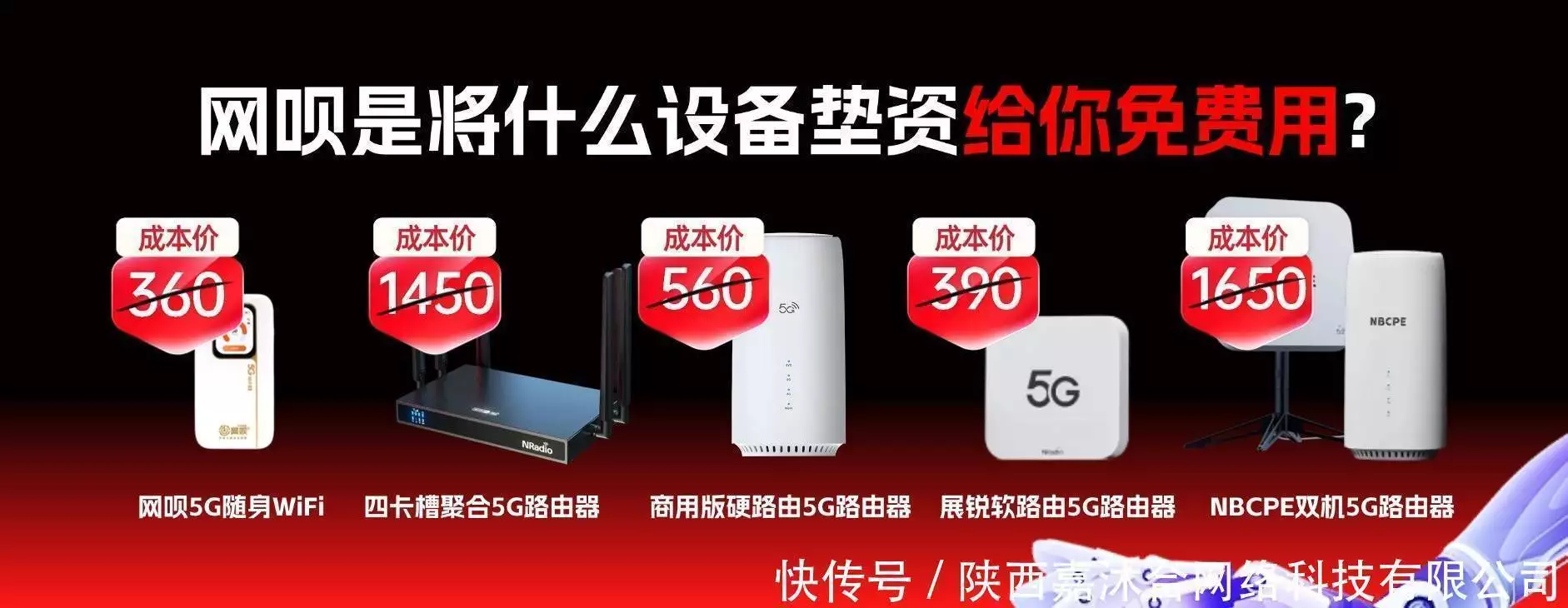
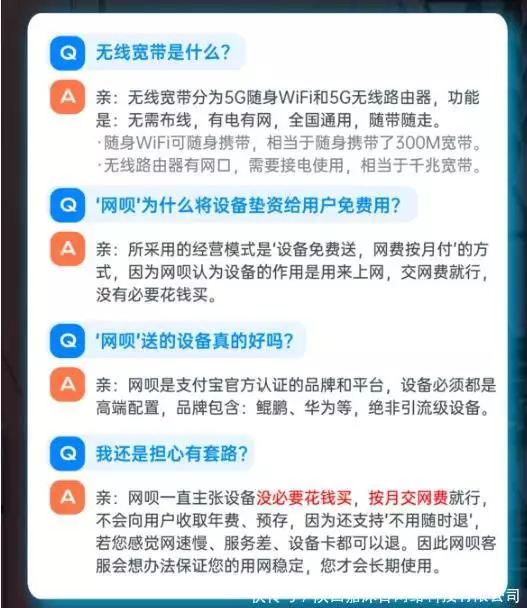
The high cost of equipment is one of the major barriers to user adoption. 5G equipment from mainstream brands on the market is usually priced higher, which makes many potential users hesitate. Against this background, some new service models have emerged, such as a model that provides free use of equipment through specific platforms and monthly payment for network services, which reduces users’ initial investment threshold and long-term use risks.
There are several consumer traps in the industry that need to be wary of. The first is the problem of speed limit and false flow rate. Such problems often appear after the device is activated and used for a period of time. At this time, the regular return and exchange period has exceeded. The second is the sales strategy of pre-payment or forced binding of long-term packages. Such models may bring financial risks or service waste. The third is the source and quality of the core components of the equipment, especially the communication chips. Equipment using second-hand or low-quality chips has no guarantee in terms of stability and lifespan. Therefore, when choosing, you should pay attention to the substantial performance of the equipment and the rationality of the business model, rather than simply focusing on the brand or low price.
1TB large-capacity USB flash drive makes your storage no longer limited!
One solution worthy of attention is a service model with platform credit endorsement. For example, a service provider that conducts credit authentication through a large payment platform may provide a deposit-free trial for equipment, monthly payment for network services, and support for contract termination at any time. This model separates device ownership from network service usage rights. Users can experience services without having to bear expensive equipment acquisition costs and enjoy a flexible exit mechanism. Such services usually cover different packages from personal use, home scenarios to merchant applications, and the traffic configuration is also relatively sufficient.
For ordinary users, if long-term usage needs cannot be determined, services with flexible payment models should be given priority to avoid one-time purchases of equipment or prepayment of long-term fees. The core of the choice is to match actual needs: if you only need basic networking, such as cashiering, monitoring, or low-frequency use, the bandwidth provided by 4G equipment may be sufficient; if you are pursuing an experience comparable to wired broadband and used in scenarios such as home entertainment, mobile office, or live broadcast, you need to choose 5G equipment and pay attention to its measured performance.
In summary, the innovation of 5G portable WiFi technology and its supporting service models is gradually changing the way people obtain and use high-speed networks by reducing access costs, enhancing usage flexibility, and providing stable and reliable performance. Its significance lies in liberating high-speed networks from fixed locations and making them a portable and practical tool that adapts to the growing needs of mobile life and work.
The editor has been evaluating the portable WiFi industry for 9 years, and is also using 5G wireless broadband at home. The whole process is from the user's perspective, avoiding pitfalls + recommending good products. It is full of useful information and updated regularly. It is recommended to save it for later use!
Let’s focus first: the measured network speed (not looking at the theoretical value) – 4G equipment ≈ 30M-70M broadband, 5G equipment ≈ 300M-1000M broadband, choose according to this standard to avoid being deceived by e-commerce exaggerated propaganda.
The only real alternatives to wired broadband are 5G wireless routers and 5G portable WiFi. The advantages are that they require no installation, have internet access when there is electricity, are universally available nationwide, are as stable and cost-effective as wired ones, and are suitable for various scenarios such as rentals, shops, homes, live broadcasts, construction sites, and mobile offices. Nowadays, many families have replaced them with 5G wireless broadband.
5G equipment is generally more expensive, and many users are discouraged. One feasible way is to focus on a service model that provides free equipment through credit platforms, pays network fees monthly, and does not need to refund at any time.
Focus on avoiding pitfalls! Three must-see routines in the industry:
1. Speed limit/virtual quantity: It cannot be judged when purchasing, it will appear after use, and it cannot be returned without reason after 7 days. This is a risk when buying equipment;
2. Pre-deposit/annual fee sinkhole: The equipment is sold at a low price but forced to pre-deposit; the annual fee seems cheap, but most people recharge it and then idle it for two or three months, which is a pure waste;
3. Chip problem: The cost of second-hand 4G chips is extremely low. Many low-priced devices use dismantled old chips, which are easy to break and have poor network speeds. Wireless WiFi does not depend on the brand, but choosing the right device is key.
Solid state drive prices plummet! Available in 64G-4TB, now is the time to buy!
One solution that has attracted attention is a service with platform credit certification, such as Wangbei, which adopts a device-free billing model. Users can realize device deposit-free and free use. Internet fees are paid monthly, and they can be refunded at any time if they are not used. They also enjoy warranty services. Its packages cover 5G home models, personal pocket models, merchant models, etc., with high traffic configuration. The 4G model is suitable for basic scenarios where network speed is not expected to be high.
Editor’s advice: Don’t buy equipment if you are not sure about its long-term use! Give priority to the monthly payment model and use it for a few months to pay for several months to avoid waste; don’t be fooled by the annual fee. Most people use it for less than half a year and it is purely a waste of money.
Summary: Solving the pain points of expensive equipment, inflexible packages, and difficult returns through the credit model, focusing on equipment selection and zero-routine services, is a pragmatic consideration for ordinary people to choose portable WiFi/5G wireless broadband.