During the National Two Sessions in 2026, the "representative channel" and "member channel" have attracted much attention. Here, deputies to the National People's Congress and members of the National Committee of the Chinese People's Political Consultative Conference focus on social hot spots and respond to the voices of the people. Among them, "education" is a key word that must be discussed in every channel. From the transformation of rural education to the progress of national education, from dedicating to science education in primary and secondary schools to protecting the mental health of teenagers, from artificial intelligence revolutionizing education forms to the development of science and technology innovation empowering industries in colleges and universities… Representative committee members told stories about educating people and made suggestions for educational development, conveying a "good voice" of education with warmth, strength and depth.
Light up the hope of rural and national education
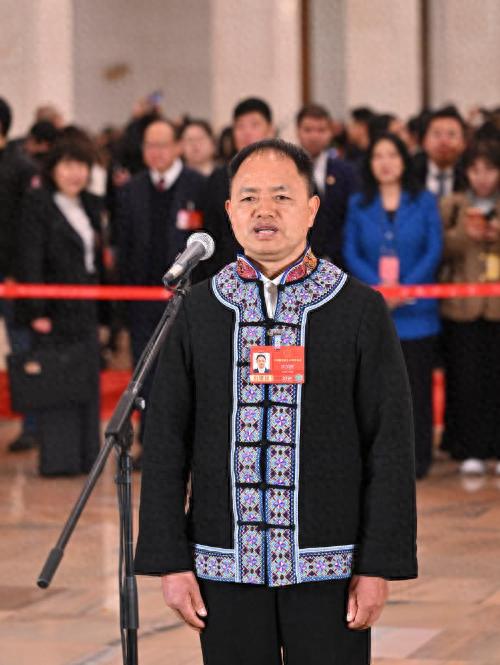
On March 5, Nong Jiagui, a representative of the National People's Congress and a teacher at Luosongdi Primary School in Liancheng Town, Guangnan County, Wenshan Prefecture, Yunnan Province, was interviewed by the media at the first "Representative Channel" collective interview event of the Fourth Session of the 14th National People's Congress. Photo by Xinhua News Agency reporter Li Xin
"Keep your original aspiration wholeheartedly, and keep one teacher, one school for life!" Nong Jiagui, a representative of the National People's Congress and a teacher at Luosongdi Primary School in Liancheng Town, Guangnan County, Wenshan Prefecture, Yunnan Province, firmly stated his commitment to the party and the people at the first "representative channel". Nongjiagui did it! He has been working at Luosongdi Primary School in Yunnan for 40 years. By using the duplex teaching method, he sent away a total of 126 children in 12 classes, allowing them to successfully enter the workplace. He also turned the former "leprosy village" into a demonstration village for national unity and progress, using actions to interpret the power of knowledge to change destiny.
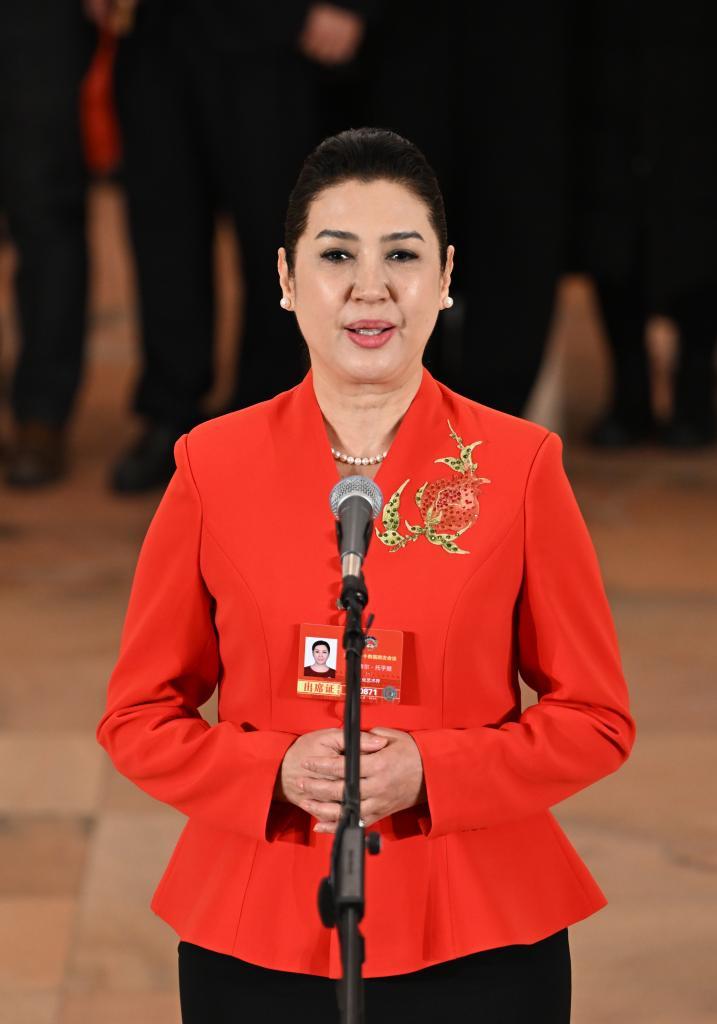
On March 4, Muyasser Tohuti, a member of the National Committee of the Chinese People's Political Consultative Conference, was interviewed by the media at the first "Member Channel" collective interview event of the fourth session of the 14th National Committee of the Chinese People's Political Consultative Conference. Photo by Xinhua News Agency reporter Cao Yiming
Young people in Xinjiang are also enjoying the benefits of education. Muyasser Tohuti, a member of the National Committee of the Chinese People's Political Consultative Conference and president of the Xinjiang University of the Arts, has witnessed the tremendous changes in education in Xinjiang – from 1 university in the early days of the founding of the People's Republic of China to 66 universities today. Undergraduate and vocational education are blooming everywhere. "In Xinjiang now, the most beautiful building is the school, and the most beautiful scenery is on the campus." Member Muyasser Tohuti said.
Cultivate talents with intellectual curiosity and mental health
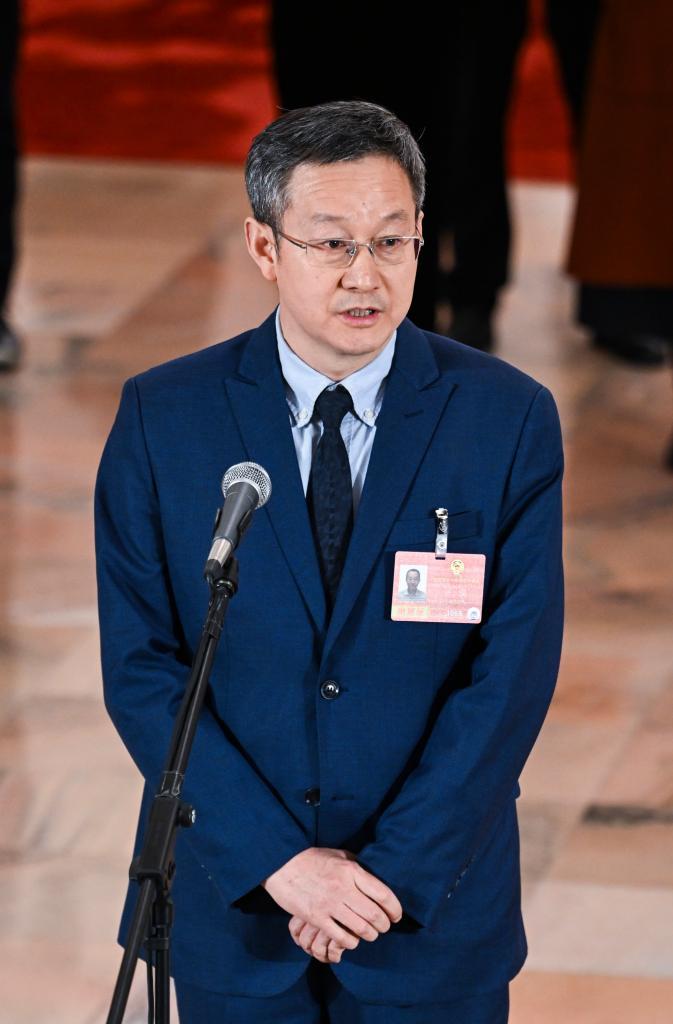
On March 7, Xu Xing, a member of the National Committee of the Chinese People's Political Consultative Conference, director of the Institute of Paleovertebral Research, Chinese Academy of Sciences, and professor of Yunnan University, was interviewed by the media at the second "member channel" collective interview event of the fourth session of the 14th National Committee of the Chinese People's Political Consultative Conference. Photo by Xinhua News Agency reporter Cao Yiming
"Science is actually very interesting, and scientists are actually very cool!" Xu Xing, a member of the National Committee of the Chinese People's Political Consultative Conference, director of the Institute of Vertebrate Paleontology of the Chinese Academy of Sciences, and a professor at Yunnan University, has gone to campus many times to tell children stories about the world of dinosaurs at close range, sharing the joy of scientific research and sowing the seeds of science in their hearts.
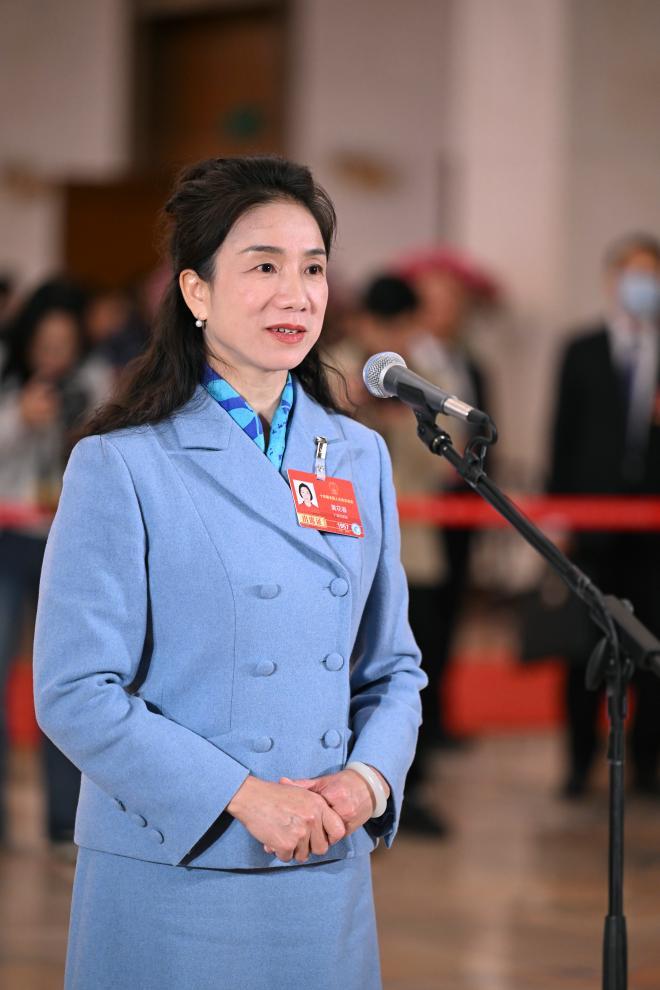
On March 9, Huang Huachun, deputy to the National People's Congress and vice-principal of Chongzuo Senior High School in Guangxi, was interviewed by the media at the second "Delegates Channel" concentrated interview event of the Fourth Session of the 14th National People's Congress. Photo by Xinhua News Agency reporter Cheng Tingting
As children grow up, they must not only be guided by their desire for knowledge, but also protected by their mental health. Huang Huachun, deputy to the National People's Congress and vice-principal of Chongzuo Senior High School in Guangxi, told the story of helping female students get out of their psychological difficulties at the "Representative Channel". "Be your ears first, then your mouth," Representative Huang Huachun shared her experience.
Technology empowers education, and universities support scientific research
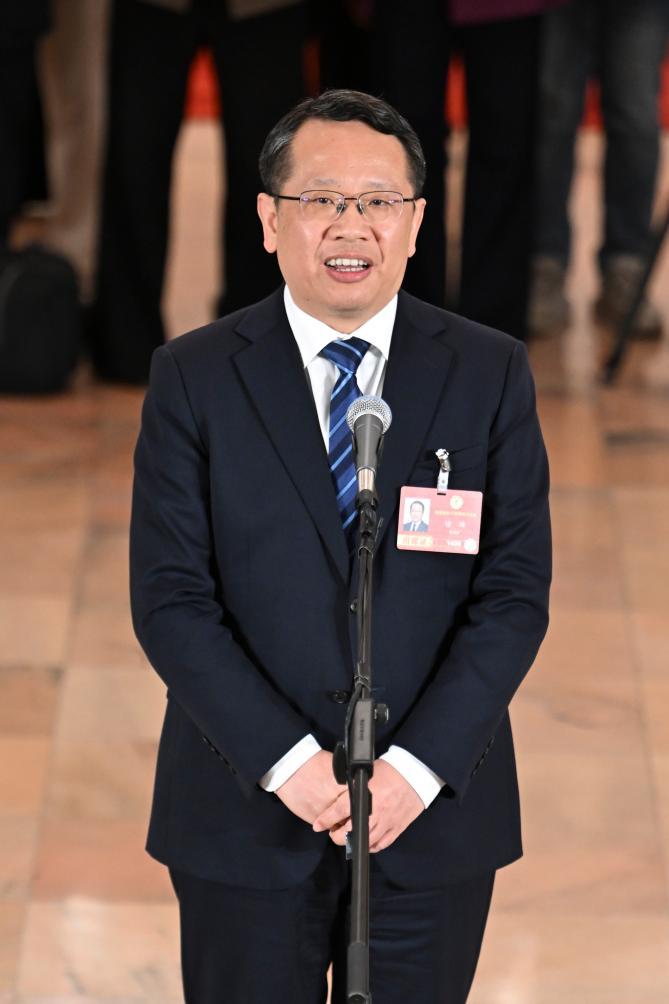
On March 11, Xu Kun, a member of the National Committee of the Chinese People's Political Consultative Conference, President and Deputy Secretary of the Party Committee of Beijing University of Posts and Telecommunications, was interviewed by the media at the third "Member Channel" collective interview event of the fourth session of the 14th National Committee of the Chinese People's Political Consultative Conference. Photo by Xinhua News Agency reporter Cao Yiming
In the era of artificial intelligence, what changes is education facing? In this regard, Xu Kun, a member of the National Committee of the Chinese People's Political Consultative Conference, President and Deputy Secretary of the Party Committee of Beijing University of Posts and Telecommunications, believes that the core of change is to promote talent training that combines large-scale and personalized training. AI has brought the education of "thousands of people with different faces" back to its origins of "thousands of people with different faces".
"AI does not replace teachers, but allows teachers to change from knowledge speakers to educators, and from knowledge authorities to guides for students' growth." Committee member Xu Kun pointed out that AI is a double-edged sword. We must adhere to science and technology for good, guide students to strengthen moral and ethical education, guide students to use AI reasonably and appropriately, and avoid inertia in thinking.
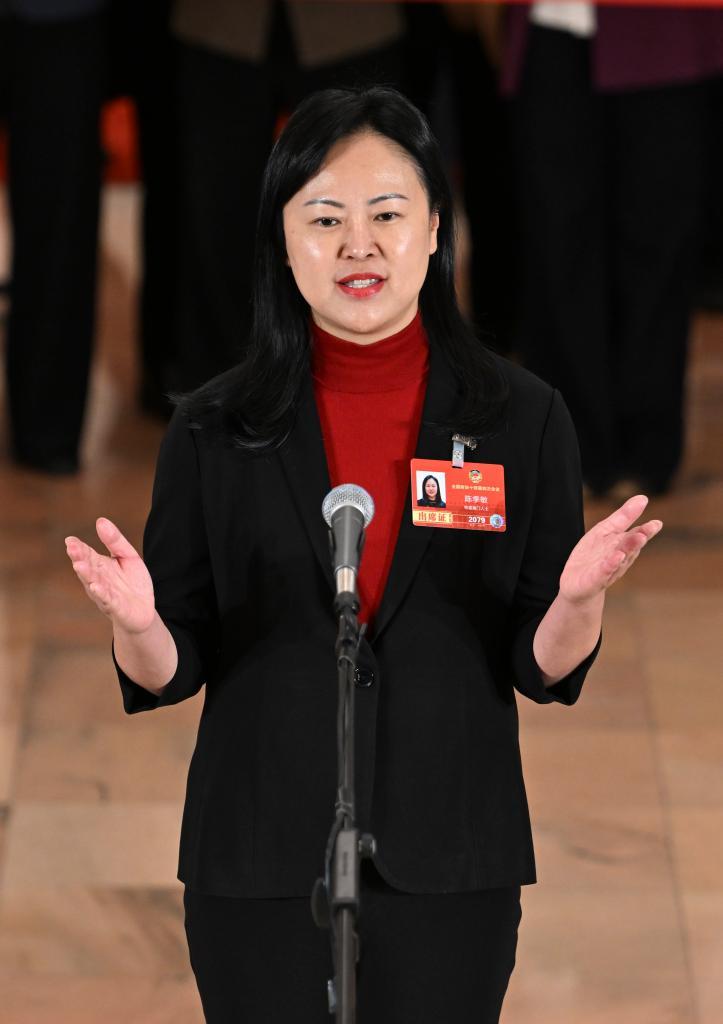
On March 11, Chen Jimin, a member of the National Committee of the Chinese People’s Political Consultative Conference and Vice Chairman and Secretary-General of the Board of Trustees of Macau University of Science and Technology, was interviewed by the media at the third “Member Channel” collective interview event of the fourth session of the 14th National Committee of the Chinese People’s Political Consultative Conference. Photo by Xinhua News Agency reporter Cao Yiming
In recent years, many universities have made scientific research a priority. In the "Member Channel", Chen Jimin, a member of the National Committee of the Chinese People's Political Consultative Conference and Vice Chairman and Secretary-General of the Board of Trustees of Macau University of Science and Technology, shared Macau's achievements in scientific research, education and technological innovation with a set of data – at the beginning of the establishment of the SAR, the number of students in Macau's universities was only There are 8,000 people, and now the number has increased to more than 62,000, including more than 9,000 undergraduate, master and doctoral students studying in science and technology majors. The number of scientific researchers in universities has also increased from 13 at that time to 1,773, an increase of 136 times.
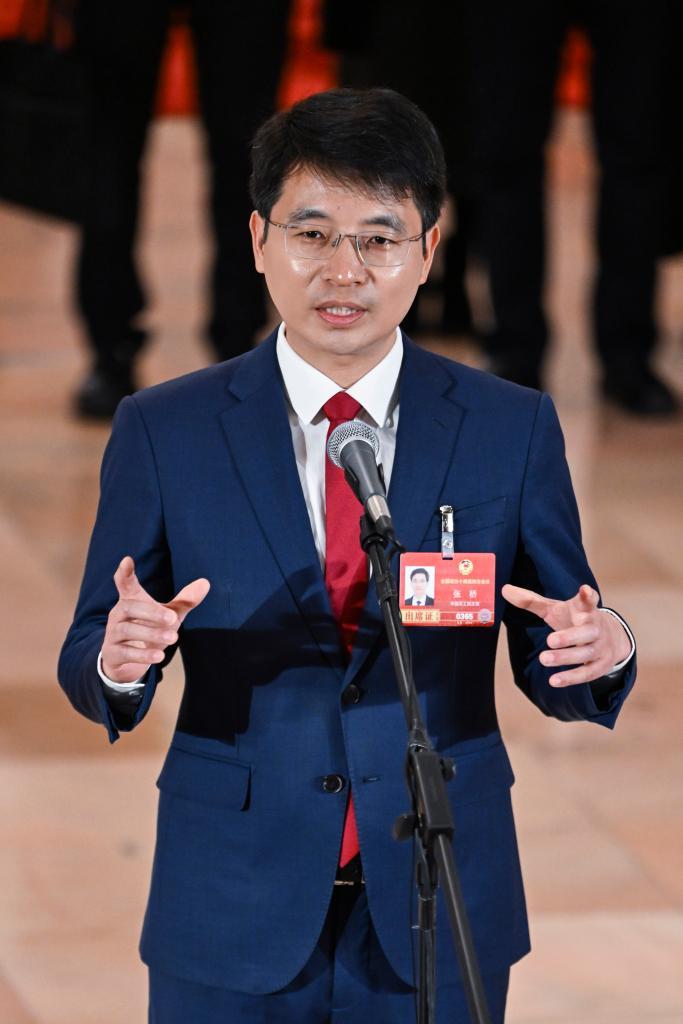
On March 7, Zhang Qiao, a member of the National Committee of the Chinese People's Political Consultative Conference, president of Soochow University, and vice chairman of Jiangsu Province of the Peasants' and Workers' Party, was interviewed by the media at the second "member channel" collective interview event of the fourth session of the 14th National Committee of the Chinese People's Political Consultative Conference. Photo by Xinhua News Agency reporter Cao Yiming
The progress of scientific research in universities will inevitably promote the integration of scientific and technological innovation and industrial innovation. In the "Member Channel", Zhang Qiao, a member of the National Committee of the Chinese People's Political Consultative Conference, President of Suzhou University, and Vice Chairman of Jiangsu Province of the Peasants' and Workers' Party, took ID card anti-counterfeiting technology as an example to demonstrate the results of the deep integration of industry, academia and research in universities. “We found that when children come back to school to study with real problems on the front lines of industry, they can learn deeper, faster and more solidly, and they can truly apply what they have learned and find employment upon graduation.” Looking forward to the 15th Five-Year Plan, Committee Member Zhang Qiao expressed the hope that colleges and universities will not only become innovation parks that provide inspiration, but also become engines that drive development, truly write papers on the land of the motherland, let the big tree of technological innovation grow deep and leafy, and ultimately bear the fruits of industrial innovation.
When education prospers, the country prospers. The "good voice of education" on the "Representative Channel" and "Committee Channel" not only tells the original intention of educating people rooted in the front line, but also shows the educational wisdom with an eye on the future, speaking to the hearts of the people.
(Guangming.com Zhang Qian)