
As the conflict between the United States, Israel and Iran continues to spill over, Ukraine is becoming a "life-saving straw" for Gulf countries struggling to survive.
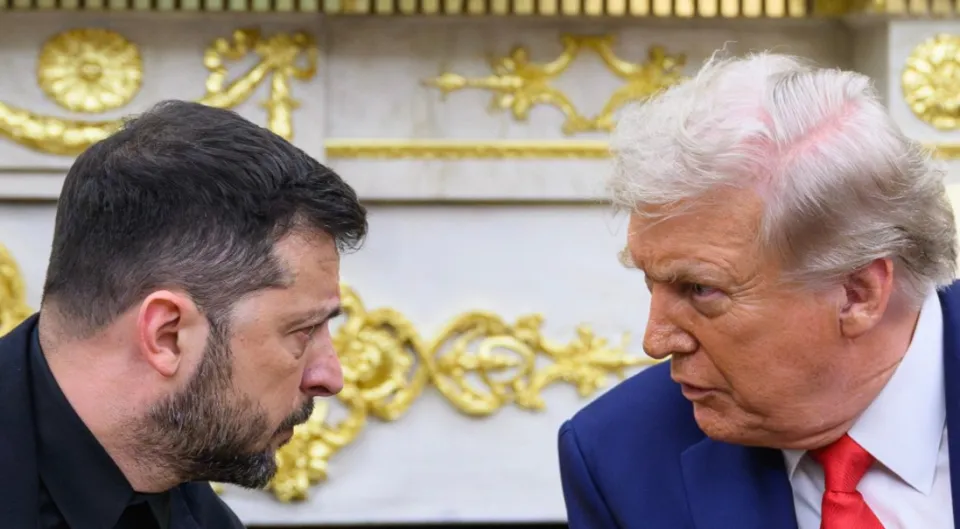
According to CCTV News, on the 10th local time, Ukrainian President Zelensky stated that a team of Ukrainian drone experts has rushed to the Middle East to assist regional countries in responding to Iranian drone attacks.
Kiev is also willing to "pass on knowledge and treasures" by exporting actual anti-drone combat experience and technology in exchange for scarce air defense missiles.
Received 11 orders
Zelenskiy said on the 10th that Ukraine has sent three expert teams to Qatar, the United Arab Emirates and Saudi Arabia, and they are expected to arrive this week. Another team of experts has arrived at the US military base in Jordan.
Members of the Uzbek expert group include Umerov, secretary of the Uzbek National Security and Defense Council, and military personnel, who will share their experience in intercepting drones with the above-mentioned countries.
According to Zelensky, Ukraine has previously received 11 requests for security cooperation from Gulf countries, EU member states and the United States. The requesting party expressed strong interest in Ukraine’s experience in developing interceptors, electronic warfare systems, countering drones and training personnel.
"Life-saving straw"
Since the outbreak of the Russia-Ukraine conflict, in addition to ground wars, Ukraine and Russia have also engaged in drone and missile wars.
Due to the close relationship between Russia and Iran, the Russian drones that Kiev defended included a large number of Iranian-made "witness" drones, thus accumulating rich practical experience.
Today, this drone is being used on battlefields in the Middle East.
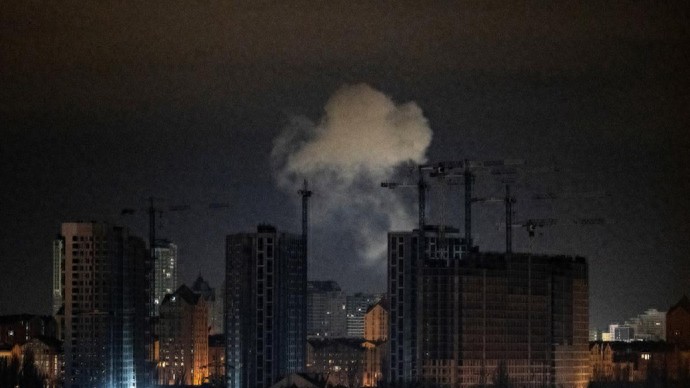
In retaliation for U.S. and Israeli air strikes, Iran has continuously launched missiles and drones at Israel and Gulf countries with U.S. military bases.
Among them, the "Witness-136" drone with long-range attack capabilities is particularly frightening.
This UAV is relatively low-cost, with a single unit costing about US$20,000 to US$50,000. It is easy to mass-produce and can implement swarm tactics when attacking, forcing opponents to invest millions of dollars in interceptor missiles to deal with them until they exhaust their defense resources and bring down their air defense systems.
For this reason, the "Witness-136" has been described as a "poor man's cruise missile."
Even the United States finds this drone difficult to deal with.
Trump administration officials admitted at a closed briefing last week that Iran's Witness-136 drones were more destructive on the battlefield than the Pentagon expected, according to people familiar with the matter.
Even more deadly, intercepting swarms of low-cost drones is rapidly depleting America’s missile stockpile.
The latest news said that Gulf countries are worried about the "imminent exhaustion" of anti-missile weapons.
However, for the Gulf countries, Ukraine has now become a "life-saving straw", and Kiev's drone interceptors may become the nemesis of "witnesses".
More than four years of Russia-Ukraine war of attrition has forced Ukraine to develop a cheaper drone interceptor, with a minimum cost of only about US$1,000, completely rewriting air defense rules and war patterns.
For example, the "Octopus-100" interceptor drone independently developed by Ukraine has a speed of 300 kilometers per hour, far exceeding the 180 kilometers per hour of the "Witness-136"; the cost is between US$2,000 and US$5,000, which is much lower than the "Witness-136".
Ukraine has not only developed low-cost interceptor drones specifically designed to track and destroy "witnesses", but its rapidly expanding drone production capacity has exceeded its own needs.
Earlier this year, Zelensky announced that Ukraine would export these combat-proven drones.
Zelensky revealed that some countries have privately proposed to purchase drones, but without the support of Ukrainian military operators, software systems and radar networks, it is difficult to intercept the drones themselves, so it is necessary to send a team of experts to impart experience.
make a deal
Of course, Kyiv is not "selfless dedication" and also has demands from the Gulf countries.
Zelensky said that Uzbekistan is willing to cooperate with its Middle East partners to exchange low-cost interceptor drones produced by Uzbekistan for "Patriot" air defense missiles.
Ukraine originally lacked anti-aircraft missiles, and the situation became even worse after the war in Iran broke out.
Due to the priority supply of advanced air defense missiles such as the American "Patriot" to the Middle East, Ukraine is experiencing a shortage of air defense interceptors.
Some commentators pointed out that Kyiv is seeking a mutually beneficial "barter" deal, with Ukraine providing rich experience in countering Iranian drones, and the Gulf countries providing Ukraine with more weapons capable of intercepting Russian ballistic missiles, each getting what it needs.
(Editor’s email: ylq@jfdaily.com)