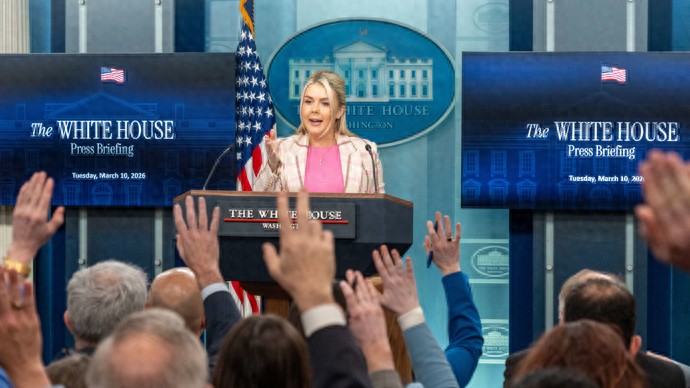

According to Xinhua News Agency, U.S. White House Press Secretary Levitt said at a press conference on the 10th that the U.S. Navy is currently not escorting any oil tankers or other ships through the Strait of Hormuz. Levitt also said that this is "certainly an option" and that US President Trump "absolutely will use it at the appropriate time" if necessary.
According to previous reports, multiple people familiar with the matter revealed on the 10th that since the outbreak of the US-Israel war, merchant ships and oil tankers parked near the strait have requested US military escort almost every day, but have been rejected by the latter on the grounds that the risk is too high.
Trump held a press conference at Mar-a-Lago on the 9th and said: "If necessary, the U.S. Navy and its allies will escort the tanker through the strait. I hope this will not happen, but if necessary, we will escort."
U.S. Energy Secretary Chris Wright posted on social media on the 10th that "the U.S. Navy successfully escorted an oil tanker through the Strait of Hormuz," but he later deleted the post. Later that day, White House Press Secretary Levitt confirmed that the U.S. Navy was not currently escorting any tankers or other ships through the Strait of Hormuz.
Several shipping industry insiders who did not want to be named told Reuters on the 10th that since the war began, merchant ships and oil tankers stuck near the strait and waiting to pass through have requested U.S. Navy escort almost every day, but have been rejected without exception. They said the U.S. Navy told shipping and oil industry executives that it could not conduct convoys for the time being because the risk of attack by Iran was too high. As of the 10th, this assessment has not changed.
There are currently hundreds of ships docked near the Strait of Hormuz, and only a handful have ventured through in the past few days. About 10 ships have been attacked, and this chokepoint is effectively blocked.
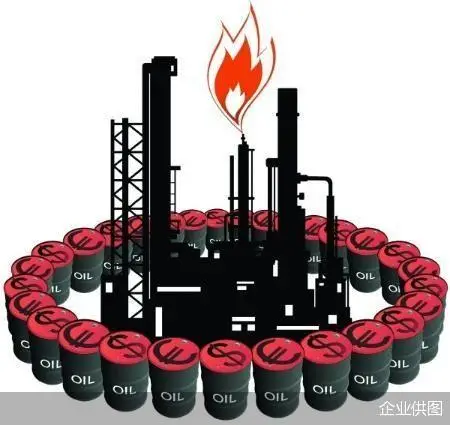
According to CCTV financial news, the United Nations Conference on Trade and Development issued a report on March 10 stating that tensions in the Middle East have caused serious disruptions to shipping activities in the Strait of Hormuz, which may have a knock-on impact on global energy supply, shipping costs and food prices, and increase the economic pressure on developing countries.
The report pointed out that the Strait of Hormuz carries about a quarter of the world’s maritime oil trade. Affected by the escalation of regional tensions, the volume of ships passing through the strait has dropped significantly recently. After the conflict escalated, the daily traffic volume dropped sharply, by about 97%. The disruption to shipping has quickly affected energy markets.
Between February 27 and March 9, the price of Dutch TTF natural gas futures, the European natural gas benchmark, rose by about 74%, and the price of London Brent crude oil futures rose by about 27%. The report also pointed out that about one-third of the world's seaborne fertilizer trade relies on this waterway. Once transportation continues to be blocked, the supply of fertilizers to some least developed countries will be affected.