The war in Iran is still in full swing. The challenge facing the United States is how to play the "win" role well, Israel's challenge is how to prevent the United States from "jumping off" and running away, and Iran's challenge is how to win without losing. However, the six Gulf countries (Saudi Arabia, the United Arab Emirates, Qatar, Kuwait, Bahrain, and Oman) must not only avoid collaborating with the United States and Israel and become unable to behave in the future, but also reposition their own long-term security and economic development directions. They face the greatest challenge.
The Arab nation vs. the Persian nation, Sunni vs. Shia, these battles have a history of thousands of years, and it is not surprising that they will continue for another thousand years. But the current war with Iran has caused difficulties for the six Gulf countries on the other side of the Persian Gulf. On the one hand, Iranian missiles are raining down on its own land; on the other hand, Iran is launching counterattacks against U.S. military and U.S. interest targets in the Gulf region due to the brazen bombing by the United States and Israel, including attacking the data centers of U.S. technology giants.
If the six Gulf countries remain indifferent to Iran's missile attacks, it will be unjustifiable in terms of national sovereignty, national sentiments, sectarian dignity and other aspects; but if they join the United States and Israel to inflict pain on Iran, not only will they not be able to "behave" in the Islamic world in the future, but they may even be unable to balance the public opinion in each country at present. There is a "level" of evil. Compared with the United States and Israel, which had no presence in the Persian Gulf a hundred years ago, Iran, which has been fighting with the Arab world for thousands of years, has a "level" of evil that is not high enough. For many people in the Gulf countries, Iran's attacks on the US military and US interest targets in the Gulf region can be regarded as "evil people will be punished."
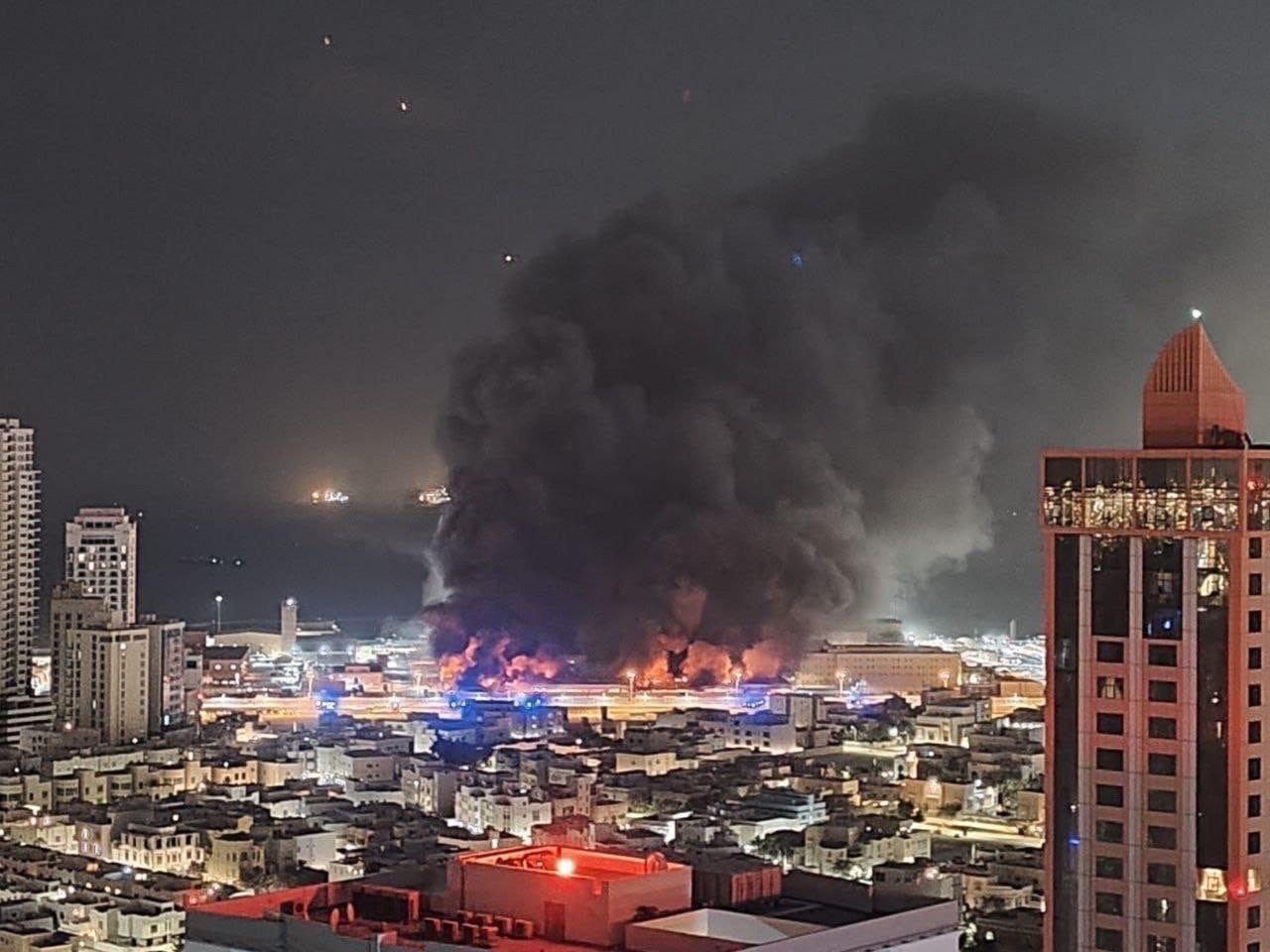
Iran’s missiles and drones attacked U.S. military facilities in Bahrain Source: Iran’s Islamic Revolutionary Guard Corps
Iran and Saudi Arabia are actually very similar. They are both theocracy and religion, and both take Islamic law as their national basis. They only have different political systems: Iran is an electoral Islamic republic based on Shiite theocracy, while Saudi Arabia is a hereditary Islamic kingdom based on Wahhabi kingship. Wahhabism is an extremely conservative branch of Sunniism.
In addition to the thousand-year struggle between Sunnis and Shiites, there is also the parallel thousand-year struggle between Christianity and Islam. The Western Crusaders left a painful history that cannot be forgotten in the Greater Middle East. However, if during the reconquest of Iberia, Christians were shocked by the splendor of Andalucia’s Islamic culture and imitated it, the Industrial Revolution gave the Christian world an absolute lead.
The discovery of oil in the Persian Gulf changed the course of history in the greater Middle East. The oil princes rely on Western capital and technology to engage in oil business that is not profitable for them. When they are intoxicated with the gold and silver, if they sprinkle a little bit between their fingers, the nomadic herders who can only count sheep will be very grateful.
At this time, Iran's Pahlavi dynasty was fully Westernized and even more favored by the West. The U.S. Navy even had to let Iran "jump in line" and give priority to F-14 fighter jets. However, after the Khomeini Revolution, the West turned its favor to Saudi Arabia and a group of emirates across the Persian Gulf. These Gulf countries also took the opportunity to purchase foreign guns and artillery to establish military and technological advantages over Iran. This was also the "letter of surrender" that the Gulf countries handed over to the West. The West has made a lot of money from it.
After the Gulf War, the U.S. military's presence in the Persian Gulf became permanent. Large air bases in Saudi Arabia (later transferred to Qatar) and Kuwait have become the core of US military deployment in the Gulf. After the Fifth Fleet was withdrawn in 1947, it was rebuilt in 1995, with its headquarters in Bahrain.
Although the United Nations inspection team has been digging for ten years without finding any evidence, the war in Iraq in the name of "completely eradicating Iraq's weapons of mass destruction" directly eradicated the political power of the Bass Party, which was secular in politics, ethnically and culturally "light on Sunni". Shiite power in Iraq became stronger, and Iran's influence was at its peak. Iran has also intervened in other Shia territories in the Greater Middle East, and the "Shia Crescent" has gradually gained momentum, causing great uneasiness in the six Sunni Gulf countries.
As early as the Iran-Iraq War, the six Gulf countries were left with a psychological shadow. Iran not only withstood Saddam Hussein's regime, which received strong support from the six Gulf countries and the West, but also almost captured Basra several times during its counterattacks. Although the six Gulf countries have a large number of advanced Western weapons and equipment, they are not assured of the true combat effectiveness of their own soldiers. The U.S. military in the Gulf is welcomed as an extraterritorial force intervening in the regional balance of power.
But Israel has always been an unavoidable sticking point in relations between Gulf countries and the United States. After the Palestinian uprising (First Intifada) in 1987, Israel realized the importance of "land for peace", and Rabin and Arafat reached the historic "Oslo Peace Agreement". However, opposition to "land for peace" has always existed. After the "Camp David Peace Talks" collapsed and Sharon ascended the Temple Mount, the Second Palestinian Intifada (Second Intifada) broke out.
Hamas was established during the first Palestinian uprising and grew during the second Palestinian uprising. Later, it squeezed out Fatah and monopolized Gaza, eventually leading to the Gaza War in 2023.
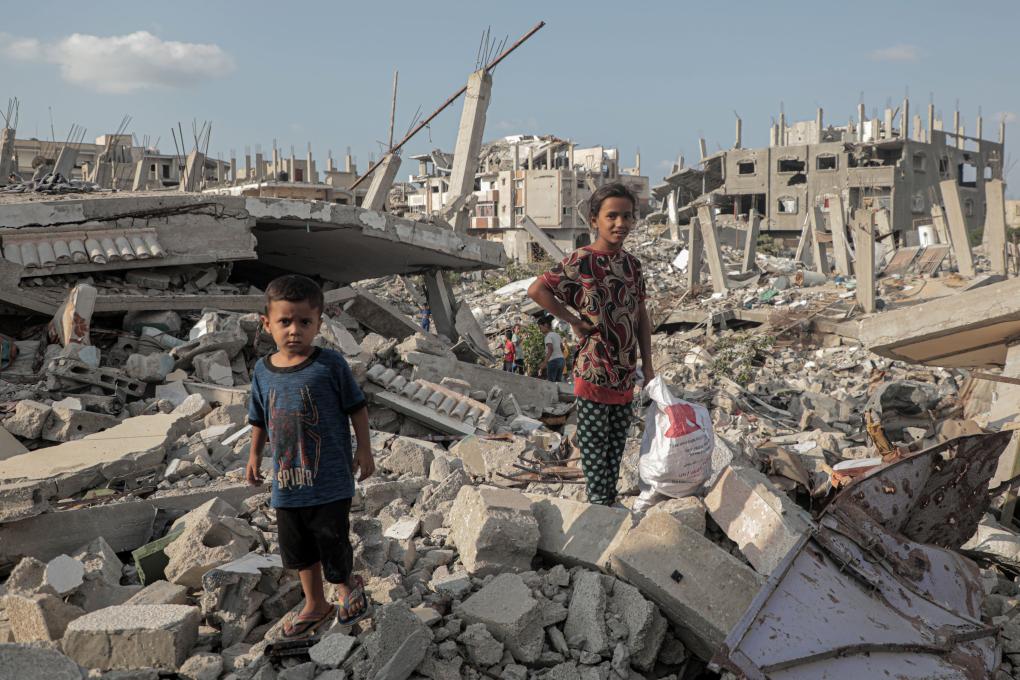
Two children stand on the ruins of a building in Khan Younis, southern Gaza Strip. Data map: Xinhua News Agency
Hezbollah was established during the earlier 1982 Lebanon War, grew during the war to drive the Israeli army out of South Lebanon, and eventually formed a "state within a state" in South Lebanon with popular support. If the Lebanese constitution had not stipulated that the president must be a Maronite Christian and the prime minister must be a Sunni Muslim, the Shiite Hezbollah might have won the president and prime minister positions through votes.
Although the Oslo Peace Agreement allocated the West Bank to the Palestinians, the gradual encroachment of the Jews has fragmented the Palestinian land. Palestinians have to constantly pass through Israeli military checkpoints to visit relatives and go to and from get off work on their own land. Their rights and interests are constantly being eroded, and Gaza has become a hell on earth.
All this aroused great indignation in the Muslim world, forcing the six Gulf countries to carefully maintain their distance from the United States, Israel's biggest supporter.
Some Arab governments, such as Egypt and Jordan, have signed peace treaties with Israel out of practical considerations. However, Egyptian President Sadat became an "Arab traitor" and was shot to death by his own soldiers during a military parade. Jordanian King Hussein was also looked down upon in the Arab world.