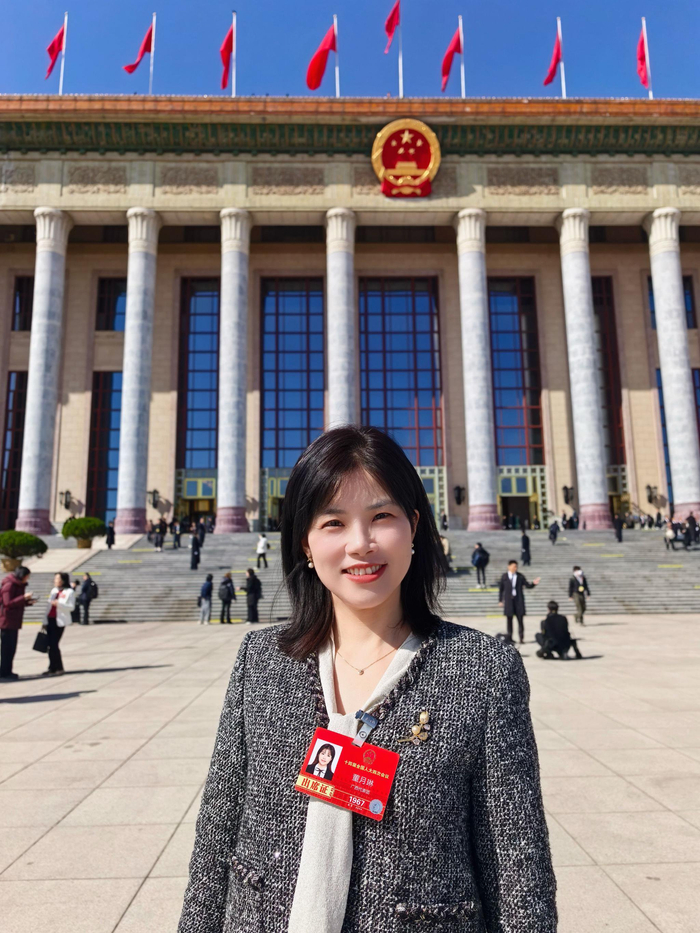
She is concerned that in recent years, the main stream of the Yangtze River has continued to maintain Class II water quality, and the proportion of high-quality water bodies has increased significantly. However, in the protection of the Yangtze River Economic Zone, it still faces coordination problems such as "upstream" and "downstream", "sectors", and "regions".
Among them, the systematic nature of the coordination of the rule of law needs to be improved. The compilation of the ecological environment code provides an opportunity for river basin legislation, but how to connect the special edition of "Water Basin Ecological Environment Protection" with the "Yangtze River Protection Law" still requires forward-looking design. The horizontal ecological protection compensation mechanism still relies on administrative agreements and lacks institutionalized legal protection. The compensation standards, fund uses, and liability for breach of contract are unclear. The imbalance of rights and interests of "upstream protection, downstream benefits" and other issues have not yet been fundamentally resolved.
In addition, the coordination of law enforcement and justice needs to be strengthened. At present, a collaborative framework has been initially established, but there is still a lack of normalized mechanisms for cross-regional case jurisdiction, mutual recognition of evidence, and ecological restoration execution. Illegal activities such as illegal sand mining and cross-regional dumping of hazardous waste are chained and concealed. However, insufficient sharing of law enforcement data restricts the joint efforts of the entire chain to crack down.
To this end, Peng Jing suggested that in the compilation of the ecological environment code, the core system of the "Yangtze River Protection Law" should be upgraded to code norms, and the legal status and operating mechanism of the river basin coordination agency should be clarified. Explore the establishment of a legislative coordination joint meeting system for 11 provinces and municipalities in the Yangtze River Economic Belt, and conduct "consistency reviews" of local regulations in key areas such as water pollution prevention and control, shoreline protection, and fishing bans and withdrawals.
In terms of law enforcement, she suggested relying on digital technology to break through the data barriers of the ecological environment, water conservancy, and political and legal departments, establish an early warning system covering water quality monitoring, illegal sand mining, and ship pollution, and achieve "one-click circulation and joint disposal" of clues in cross-provincial cases. For high-frequency illegal activities such as illegal discharge of hazardous waste and illegal fishing, a joint supervision system between the ecological environment department and the public security agency will be established.