IT House reported on March 9 that Finnish startup Donut Lab released the third independent test report issued by the Finnish National Technology Research Center (VTT). The report confirmed another statement of the company: its solid-state battery can still retain 97.7% of its charging capacity after being left alone for 10 days.
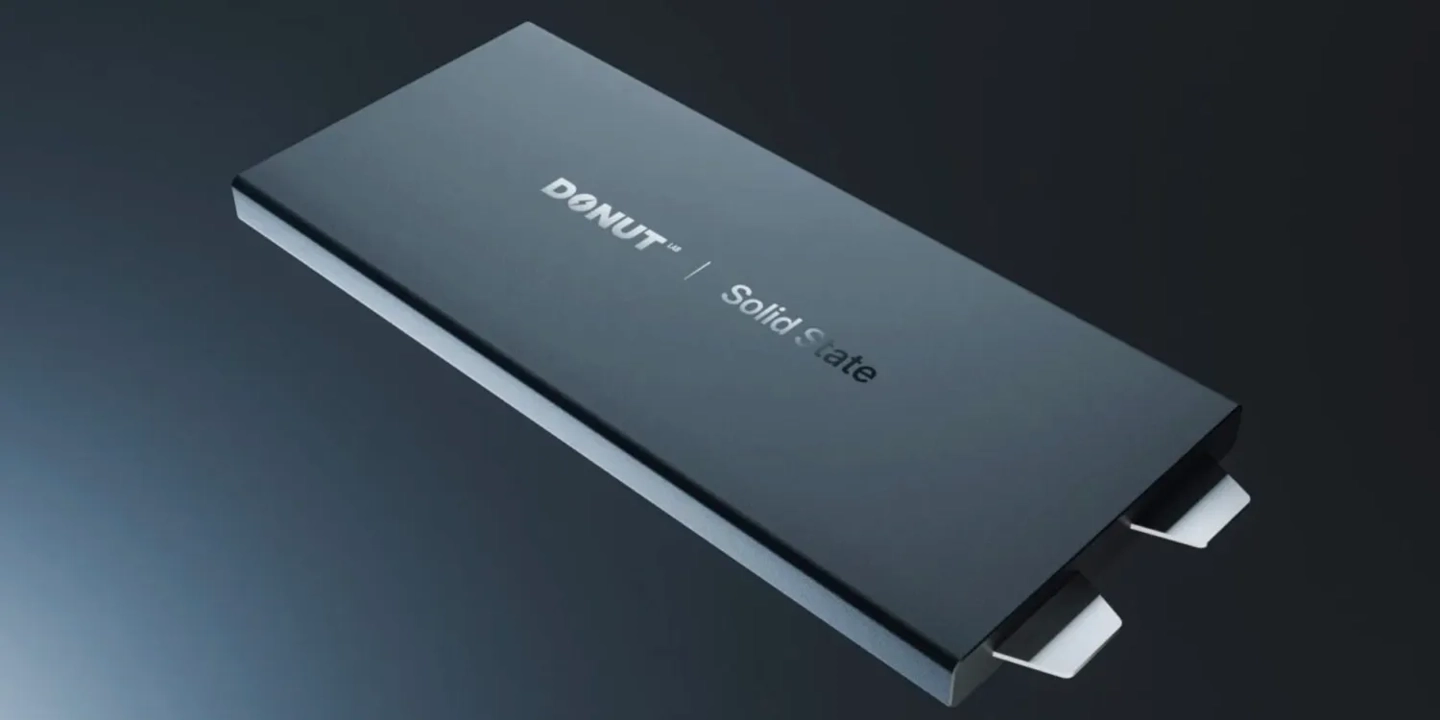
This new report (No. VTT‑CR‑00125‑26) adds self-discharge performance to an expanding list of independently verified parameters. But three reports to date, two of the company's most disruptive claims remain completely untested.
According to IT House, this self-discharge test adopted a simple and direct method. VTT first conducted an initial capacity test on the battery cell numbered DL1. The discharge capacity measured at 1C rate was 26.5 Ah, which was higher than Donut Lab's nominal specification of 26 Ah, and also significantly higher than the 24.9 Ah measured by another battery cell in the previous high-temperature test.
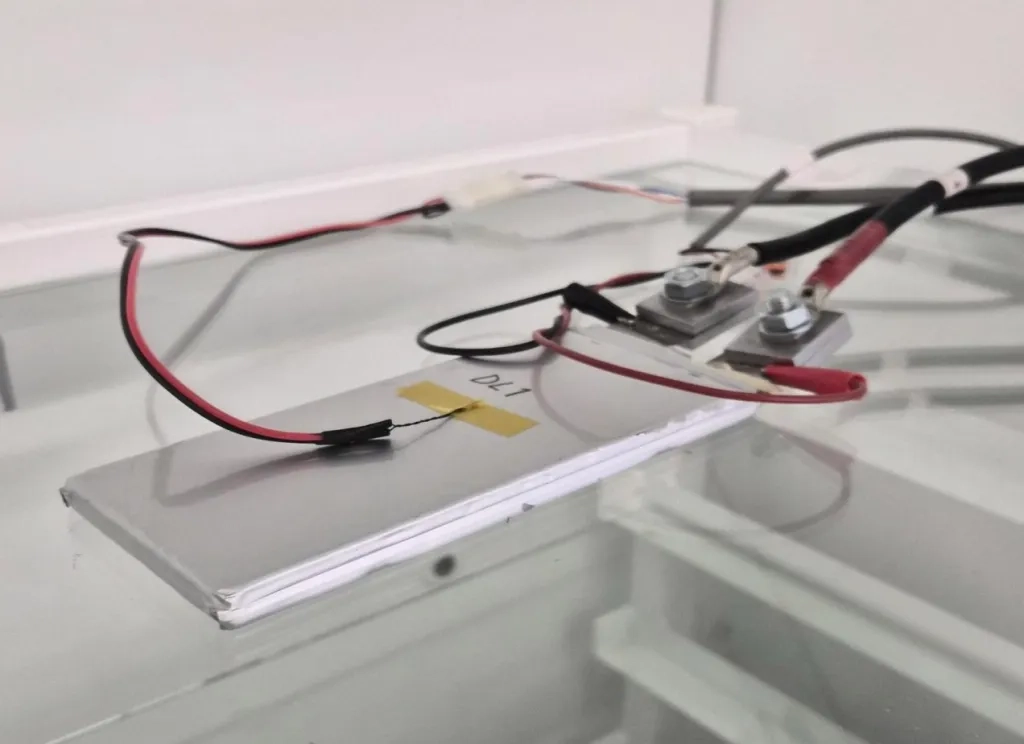
In the self-discharge test, VTT first charges the battery to approximately 50% state of charge (13.335 Ah), then leaves it at room temperature (22–28°C) for 240 hours (10 days), recording the voltage every 10 seconds. After the rest, VTT discharges the battery core, and the recovered power is 13.029 Ah, which is 97.7% of the initial power.
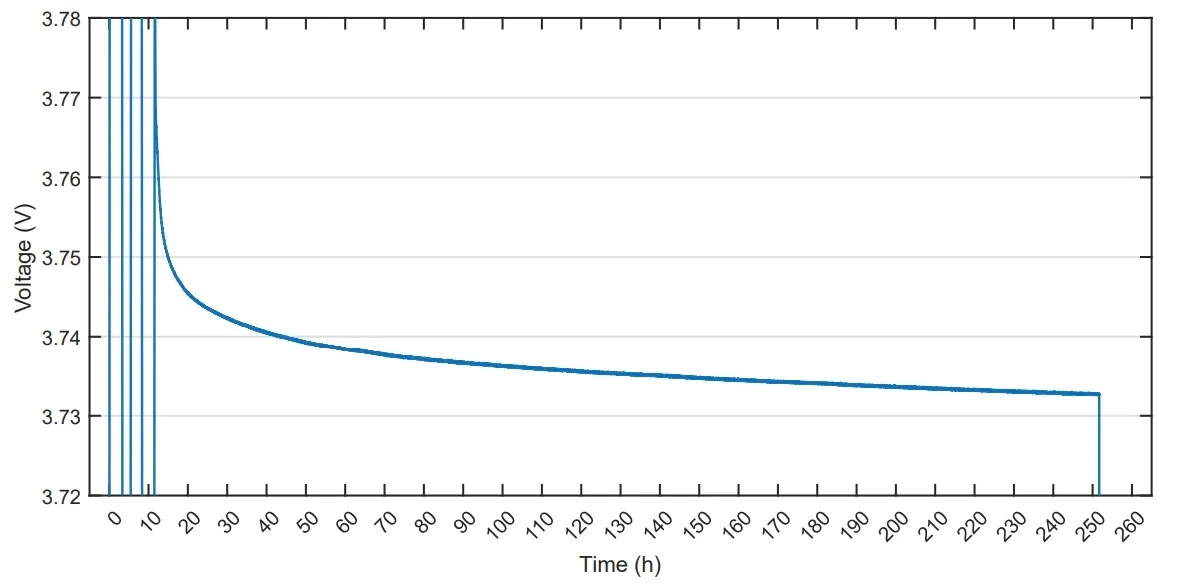
The voltage data shows an interesting pattern: the cell voltage dropped by 60 mV in the first 10 seconds and by 103 mV in the first hour – this is mainly a voltage relaxation phenomenon after charging, not a true self-discharge. From the 10th hour to the 240th hour, the voltage dropped only an additional 12 mV (from 3745 mV to 3733 mV), indicating that the cell has basically stabilized.
VTT concluded that the tests did not cause any visible damage or changes to the cells.
The monthly self-discharge rate of standard lithium-ion batteries at room temperature is typically 1%–3%. Battery University points out that lithium-ion batteries lose about 5% of their power in the first 24 hours, and then enter a steady decay stage of 1%–2% per month.
In theory, solid-state batteries should have lower self-discharge rates because their solid electrolytes are less susceptible to the parasitic chemical reactions that cause energy loss in liquid electrolyte cells.
Donut Lab's battery cell has a capacity loss of 2.3% in 10 days at 50% state of charge. This data alone is not outstanding. According to linear projection, the monthly loss is about 5%-7%, and the performance is not as good as that of conventional lithium-ion batteries. However, self-discharge is not a linear process, and the voltage curve shows that most of the loss is concentrated in the initial relaxation stage. The voltage curve from hour 10 to hour 240 is extremely flat – only drifting 12 mV in 230 hours, indicating that its long-term self-discharge rate is actually very low.
Without a longer resting period (30 or 60 days), it is difficult to accurately distinguish the initial relaxation effect from true steady-state self-discharge. The 97.7% capacity retention rate is reliable, but not enough to rewrite industry perceptions.
This is the third VTT report in three weeks. The first confirmed 11C ultra-fast charging (charge to 0–80% in 4.5 minutes), the second confirmed discharge at high temperatures of 100°C, and the third verified qualified self-discharge performance.
However, what Donut Lab continues to verify are the performance that the battery industry considers technically achievable – fast charging, high temperature resistance, and low self-discharge. These are engineering challenges, not problems at the level of physical laws. Solid-state batteries are inherently supposed to excel in all three areas.
The two parameters that aroused the strongest doubts after the CES show have not yet been independently tested by any third party:
One is the energy density of 400 Wh/kg – the chairman of Honeycomb Energy once called it "physically impossible to achieve";
The second is a cycle life of 100,000 times – this data far exceeds any existing results in the industry.
VTT's report did not provide cell weight or physical dimensions, and energy density cannot be independently verified based on available data alone.
There is another detail worth noting: the initial capacity test of the DL1 battery cell measured the discharge energy to be 91.8 Wh, and the nominal specification is 94 Wh. If the battery cell weighs about 235 grams, the energy density is close to the claimed value of 400 Wh/kg. However, VTT did not publish the weight. Inferring parameters through energy density is completely different from direct measurement.
The company's CEO, Marko Lehtimäki, has personally guaranteed that the Verge electric motorcycle will be mass-produced and delivered with this battery in the first quarter of 2026. Today, that deadline is just days away.
Three separate VTT reports in three weeks are encouraging, but there is still no truly disruptive breakthrough. Fast charging performance may be the most eye-catching one, but considering that the Chinese market has entered commercialization of products (such as BYD's second-generation blade battery), this advantage is relatively limited.
What the outside world is really waiting for is the measured data of energy density and cycle life. Once these two things are confirmed, the battery will be truly revolutionary and not just an ordinary solid-state battery with excellent thermal properties. Until VTT weighs the cells and completes thousands of cycle tests, the conclusion remains the same: the prospects are promising, but the most critical indicators remain unproven. It is getting closer and closer to the moment when Donut Lab either comes up with solid evidence or has no easily verifiable performance to announce.