There hasn’t been a purely commercial documentary in the market for a long time.
In this regard, Leng Yan would like to start this article by borrowing a passage from the opening sequence of "The Age of Torrents".
"It's time to re-evaluate the world. After three long years, the ice is now unblocked and everything is flowing again… Standing at the crossroads of revaluation, full of questions and eager for answers."
On February 16, the business observation documentary "Turrent Times" was launched on Tencent Video.
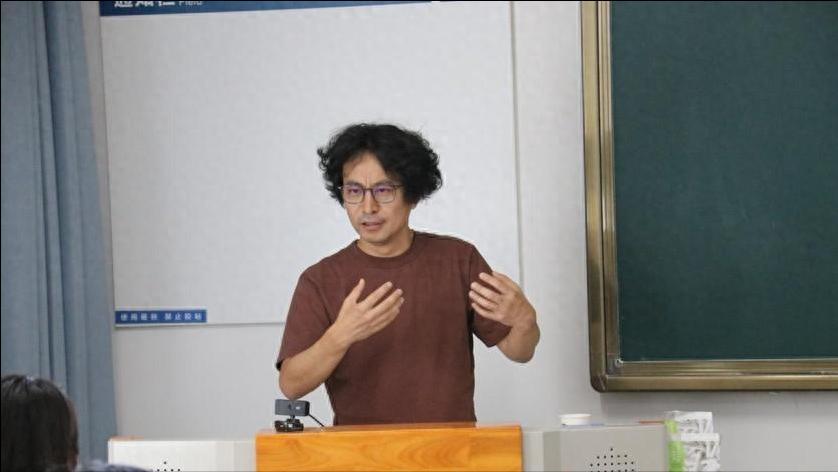
The program was developed by Eureka Studio, the production team of "Mask Hunter" and "Thirteen Invitations". Li Xiang, a top financial reporter, was invited to serve as the soul of the whole film. He cut into five major contemporary issues such as live streaming, coffee industry, and new consumption, and led the audience to explore from Li Xiang's first-person perspective.

The exploration of "Turrent Age" ushered in a double harvest of popularity and reputation.
In the first episode of the broadcast, the sentence "If the artist doesn't understand, don't do live broadcasts" made "Torrent Era" directly top the hot search on Weibo.
Subsequently, topics such as "Why are there so many Internet celebrity shops in Changsha" and "Anfu Road residents complain about Internet celebrity street photos" triggered by the program have also continued to arouse heated discussions, and have appeared on major lists such as Weibo and Sina News.
As of the end of the season, "Turrent Era" has reached the top 10 most influential variety shows on Weibo and scored 8.5 points on Douban.
While congratulating, Leng Yan is also full of curiosity about "The Age of Torrents".
When talking about business in the new year of 2023, what should we talk about?
Leng Yan wants to see with everyone how "The Age of Torrents" answers this question.
How to enter the "rapid era"?
As an observer of the show, how can Li Xiang start observing and enter the turbulent business world? This is the first problem the program faces.
Looking at it coldly, the answer of "The Age of Rapids" is, don't rush in.

The entire film of "The Age" begins with an incongruous observation.
The first episode, "Live Wave".
In front of me is the busyness, noise, shouting and sudden surprises in the live broadcast room.
On the other side, as the protagonist of "The Torrential Era", the interviewer Li Xiang was slightly embarrassed.

"I checked, they are not a combination (band), called Fahrenheit."
Compared with directly commenting on the commercial behavior of live broadcasts, "Turrent Times" retains Li Xiang's most direct reaction at the moment. At that moment, his closest understanding of what was happening in front of him came from the Internet query he just made.
Then, at the beginning of the main film, there was another heated debate.

At a working meeting of Yuanwang Technology, CEO Xie Rudong was sharply criticizing employees without mercy. Li Xiang, on the other hand, was among them, saying nothing, looking directly at Xie Rudong and everything in front of him, silently observing.
In just a few minutes, the sense of distance and strangeness presented by "Turrent Age" is obviously more direct to the heart than a quick one-on-one approach.
In fact, for observation programs, Leng Yan always adheres to the point of view that a real observation must also be an emotional progression.
In "Rush Times", the show fully presents such emotions.
Being abrupt and at a loss is the most real state when people stand in the "rapid era" and suddenly face the "rapid".
The subsequent calm observation is the attitude that Li Xiang and "The Rapids Era" want to establish: first directly experience the impact, then remain calm and independent, and then enter the "rapid".
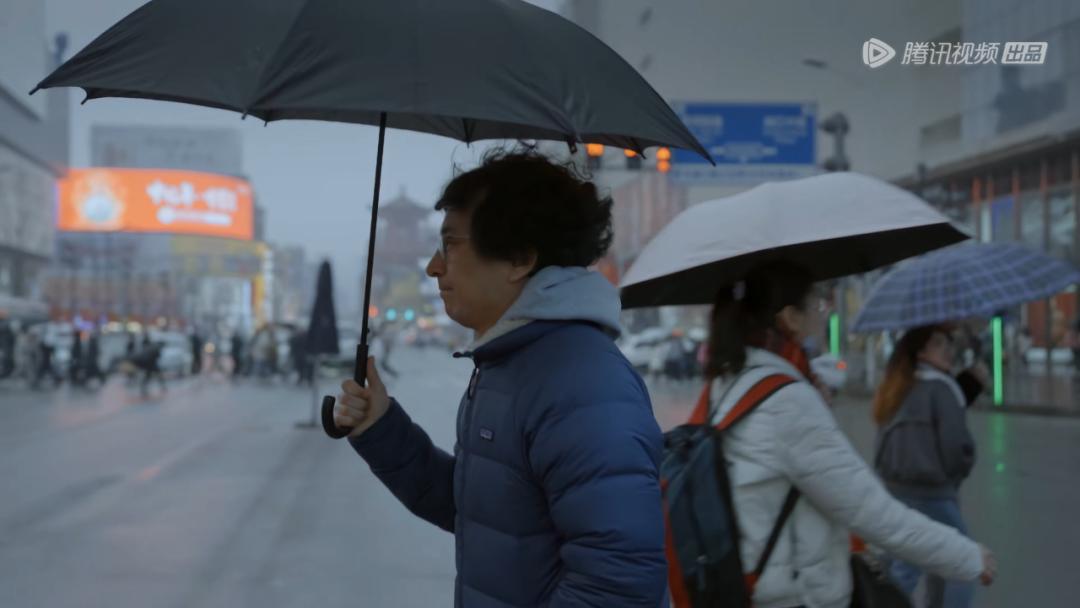
After clarifying his attitude, as a professional financial reporter, the effectiveness of observer Li Xiang's professionalism began to show.
We will find that as a business observation documentary, "The Age of Rapids" is far more than just "observation".
From a cold perspective, what "The Age of Rapids" pursues is not a meticulous observation, but "fierce collisions" in the observation.
In the third episode, the program explores Changsha’s “new consumption”.
Faced with Cha Yan Yuese, the absolute shining star in the tea industry in recent years, Li Xiang talked with its founder Xiaomai. Li Xiang did not focus on understanding the family history of Cha Yan Yuese, but went straight to the "small shop mentality" of Cha Yan Yuese's operations and discussed its pros and cons.

As an experienced business reporter, Li Xiang perfectly captured the key points of the conversation.
Use sharp topics to break the situation, and use a "collision" attitude to pry open the "thoughts and thoughts" of the guests in each issue. Li Xiang gave each guest a "business issue" that was most suitable for discussion. And this also allows "The Age of Rapids" to successfully avoid falling into the trap of success studies often found in commercial documentaries, that is, telling "different but similar" business stories one after another.
At the same time, the initiative of "The Rapid Times" also stems from observer Li Xiang's impulse and curiosity about the business itself.
When it comes to live streaming and opening clams, we need to follow along to catch and open clams.
To explore new purchases in the store, ask the clerk for some work clothes and go with them for delivery.
In the process of active participation, "Rush Times" builds a real, natural and dynamic dialogue.
This kind of conversation can be under the street lights while walking home after the live broadcast, or on the way to deliver goods together.

Participants are fully engaged but also completely relaxed.
In addition, what is a bit unexpected for Leng Yan is that "The Age of Torrents" specifically shows a lot of behind-the-scenes discussions between Li Xiang and the production team in the finished film. Such clips are actually extremely rare in commercial documentaries.

In this regard, Lengyan specifically asked Ou Daming, the chief director of "The Age of Torrents".
"When previous ideas or perceptions change, how do you present this change? How do Li Xiang and the team solve the problem? Or how do everyone unify their thoughts or debate a certain issue? This in itself is also a way for everyone to understand a certain issue together."
Why is "The Age of Torrent" so frequently on the hot search list and triggering discussions? Leng Yan got a clue from director Ou Daming's answer.
"Finding issues that the audience is curious about and breaking the circle" is the default production idea in current documentary production. However, "The Age of Rapids" takes a step further: bringing the audience's curiosity into it.
From the initial observation, to the communication and interaction with every guest on the show, to the final production, "The Age of Torrents" has always followed the most authentic cognitive process.
If it's awkward or out of the blue, feel free to reveal your emotions. If a new perspective emerges, discuss it immediately. In a way, "The Age" captures the essence of observational documentaries: the audience never wants to see a story about "observation," they want to "observe together."
"Essays" of the times when form is scattered but spirit is gathered
In the program introduction, "The Torrent Times" defines itself as an "author-style" business observation documentary, which follows the first-person perspective of business observer Li Xiang to record and narrate.
As for the definition of "authorial style", Leng Yan is a little curious.
If it is an "author-style" documentary, then what kind of "style" does "The Times" use for "writing"?
Ask and answer yourself. For Leng Yan, "The Age of Rapids" is closer to an "essay" from the business era.
First of all, it is the bold "shape dispersion".
Taking the first issue of "Live Broadcast" as an example, the program uses three levels to construct a content narrative.
The first level is the undoubted giant wave in the live broadcast industry. The top anchor who brings in tens of millions of goods in a single game and the "highest building of the e-commerce company" behind him. Every move they make can easily change the industry.

On the second level, there is the sudden rise of the central anchor "Little Bear Haunted" and the Kaibeng anchor Haiba with monthly sales of 7 million. In the turbulent times, they struggled to seize the opportunity and break through with all their strength.

On the third floor, there are new anchors learning to set up lights on the roadside of Hangzhou Vientiane City. It’s hard to say whether they still have a chance to win the market in the current red ocean of live broadcasting, but whether they are driven or coerced by the times, they are still moving forward bravely.

Follow up with the second episode, "Coffee Surrounding".
The program originated from exploring the role of business in rural development. During the observation of the role of planters, village party secretaries, brand purchasers, coffee tasters and other links in the industry chain, it came across the commercial constraints that are difficult to break through in the periphery of coffee planting.

The third episode, "Continuous Consumption". In this episode, the rapids are more rapid.
The small mom-and-pop shop has grown into an absolute hit in the tea industry, but the once "full" super Wen Heyou Chuxiang encountered a crisis. At the same time, backed by mature strategic planning capabilities, Ningji opened 800 stores during the epidemic with lightning speed and gained a firm foothold.
In just a few years, major new consumer brands have entered the market with different identities and started competing.
In the program, when Li Xiang was asked "Whether perspective is more important or rigor is more important," Li Xiang gave this answer: "Anything that is particularly beautiful must omit a lot of complexity and richness in it, because it must be a line to be beautiful. It has a sense of conflict, but it is never that simple."
Li Xiang finally chose "rigor", and "Turrent Times" also respected rigor and the "complexity" of the business world.
We will find that there is no protagonist in "The Age of Rapids" who can "represent the industry" to tell his "one line" story alone. On the contrary, the show tries its best to focus on the stories of every participant in the business world.
Coincidentally, this design gives "Turrent Age" a strong sense of flow.
In other words, to a certain extent, it shows us the essence of the business world: it can give anyone an opportunity, but it is also ever-changing and people dare not stop for a moment. Before the wave actually hits, you never know where you will be, you don’t know who you will become, let alone who will replace you.
Every participant in "The Age of Rapids" is moving forward bravely on his own track, but they also influence each other and are interlocking.
"Xing San" and then "Shen Gather".
At a superficial level, every episode of "The Rapids" attempts to use the universal logic of business operations to decipher the unchanging truth behind the "turbulence" in various industries.
In the first episode, faced with the breakthrough of live broadcast and the reshuffle of the industry, Li Xiang mentioned the common theorem "Innovator's Dilemma" in the business world.
In the fourth episode "The Center of the Universe", Li Xiang thought about the issues of "commercialization" and "localization" regarding the business changes on Anfu Road.
In the latest episode of "Through the Cycle", starting from the old restaurant where Li Xiang has eaten for more than ten years, to theater management, and then to the old car company Audi, Li Xiang explores the secrets of "everlasting business" and "industry cycle" at the intersection of various industries.
In each issue, "Turrent Times" starts from each enterprise and individual, trying to weave a complete picture of the industry, and then re-examines it using the theorems that run through the business world, allowing the audience to suddenly have the enlightenment that "you can see the whole thing at a glance."
And when the audience thinks about it a little more, they will find that the rapid torrent at this time is just a recurring moment in business history.
As a result, the satisfaction of having just realized the truth collided fiercely with the insignificance of "a drop in the ocean", and "The Age of Rapids" created a unique sense of satisfaction for commercial documentaries.
However, on a deeper level, what is really attractive about "The Age of Turbulence" is its attempt to explore the individual choices and emotions behind the times.
The end of the third episode, "Continuous Consumption," is Leng Yan's favorite sequence.
After recording the fierce competition among new consumer companies for an entire period, the director team chose to focus on a football match in a restaurant and bar.
After the game ended, Li Xiang strolled on the street, and the background sound continued the commentary when celebrating the victory during the game broadcast: Argentine poet Borges once said that any destiny, no matter how complicated and long, is actually only reflected in one moment, that is the moment when people completely wake up to who they are.
A very poetic scene allows us to get a glimpse of the value choices hidden deep in "The Age of Torrents".
In the final analysis, the so-called "rapid era" is a "wave" created by each individual. The story of business must ultimately be about the choices of "people".
"The Age of Rapids" perfectly implements the title of the opening chapter: weak grass does not grow in the desert, and there are no nameless people in the sea.
Either they are the pioneers who actively promote the industry wave, or they are overwhelmed by the heat wave of the industry and even feel at a loss.
The people who are making decisions are the "souls" that keep the commercial torrent flowing forever. "Turrent Times" is a program that has moved Leng Yan very much since the beginning of the new year.
Even while writing this article, Leng Yan revealed a lot of emotion between the lines of his objective analysis.
When communicating with the creative team of "The Age of Rapids", producer Liu Dongxiao's words touched Leng Yan very much: We are both in the wave and the ones who make the wave.
The same is true for the creation of documentaries. For creators, real creation is never just about how to record the "wave", but about trying to walk into the "wave" and become "wave makers" together.