According to CCTV Finance, as one of the world's important gold trading centers, the trading volume of Dubai's local gold market has increased significantly, and some investors have turned their funds to gold and other safe-haven assets.
At the same time, due to grounded flights and blocked logistics channels, a large amount of gold was stranded in Dubai. Due to high storage and capital costs, some traders were forced to sell gold at a discount.
According to reports, some traders have begun selling gold at discounts of up to $30 an ounce to the London benchmark.
In the past week, gold rose significantly in the early days of the conflict in the Middle East. At the opening of trading on March 2, spot gold and silver both soared. COMEX gold rose by more than 2%, reaching a maximum of more than 5,400 US dollars per ounce. It then fluctuated lower and continued to fluctuate at a high level in the range of 5,000 US dollars to 5,200 US dollars per ounce. It did not continue the previous increase.
How to price the relationship between gold’s safe-haven asset properties and geopolitics?
Hu Jie, a former senior economist at the Federal Reserve and a professor at the Shanghai Advanced Institute of Finance at Shanghai Jiao Tong University, said in an interview with China Business News that gold’s narrative logic is largely anchored in “emotions.”
He said that if the conflicts between the parties can be calmed down and a new balance can be reached in a short period of time, public concerns about geopolitical tensions may be alleviated. In this case, not only will the safe-haven narrative of gold not be strengthened, but it may continue the previous moderation trend and push the premium to fall further.
Transportation Bottlenecks and the Price of Gold
Since the beginning of this year, gold prices have risen by about 20%, and once hit a record high above $5,595 per ounce in late January. Ongoing geopolitical and trade tensions, as well as concerns about the independence of the Federal Reserve, have combined to support gold demand.
However, in Hu Jie's view, before this round of relevant situations escalates, "this round of emotional resonance spurred by geopolitical turmoil is coming to an end. On the one hand, the price of gold is at a high level, and on the other hand, the previous geopolitical situation has shown signs of easing, including the relative calm of the Palestinian-Israeli conflict and the possibility of easing the Russian-Ukrainian conflict. When the intensity of this macro narrative weakens, the market's emotional resonance will show weakness."
Now, the resurgence of the situation in the Middle East has added various unexpected variables to this decline in sentiment.
As mentioned earlier, the situation in the Middle East has led to the interruption of air transportation in and out of Dubai, and global gold and silver circulation is suffering a major impact. Traders believe the move could exacerbate precious metals prices that have been volatile this year.
According to reports, as a global gold transportation hub, Dubai carried about 20% of global gold circulation last year. This includes both gold refined in the UAE and the Eurasian gold trade transiting there.
Traders and analysts believe that a prolonged disruption to gold and silver shipments could push up regional prices in Asian markets and exacerbate recent volatility in the precious metals market.
There are also signs that refiners are facing challenges in sourcing semi-refined gold bars that are typically minted at mines. Samit Guha, CEO and managing director of MMTC-PAMP, India's largest precious metal refiner, said that about 10% of the company's gold ingots come from a mine in the Middle East, but the supply has been interrupted. He said logistics costs for new contracts sourced from other regions have soared by 60% to 70% since the conflict began.
John Reade, senior market strategist at the World Gold Council, said: "After the grounding of flights in the Middle East, gold supply issues have caused concerns. This is the reason for the sharp fluctuations in domestic gold prices in India."
Data shows that Dubai will be the world's second largest gold exporter in 2024, and India will be its largest export destination. Rhona O'Connell, director of market analysis at StoneX, also believes that India may be most affected by the disruption in Dubai, as Dubai is a key transit point for precious metals shipped to India.
"In the short term, people can still manage to cope, but if it lasts for too long, everything will be unpredictable." O'Connell said.
Chirag Sheth, chief consultant for South Asia at Metals Focus, an analysis agency, believes that in India, one of the largest consumers of gold in Dubai, local buyers still have room to wait. Its recent demand is relatively weak, and large imports in January have inflated inventories. "But if transportation delays continue for several months, problems will emerge."
There is still a lot of gold blocked
Since the outbreak of this round of conflicts in the Middle East, most commercial flights in the Gulf region have been suspended. Although a small number of passenger flights took off from Dubai on the 3rd, people familiar with the matter revealed that these flights did not carry gold, and perishable cargo was given priority. As of the 6th, there was still a large amount of gold transportation blocked, although some gold had been loaded onto departure flights in mid-week.
As mentioned earlier, transportation bottlenecks have caused gold prices to fall further, with the spot price of Dubai Good Delivery standard gold last trading at around US$5,172 per ounce. According to people familiar with the matter, many gold buyers have suspended new orders because they cannot ensure timely delivery and the cost of transportation insurance is too high. To avoid bearing storage and financing costs indefinitely, gold traders are offering a discount of $30 an ounce to London's global benchmark price.
However, China Business News specifically asked a local resident in Dubai that the prices of gold jewelry she saw in gold stores were the same as before, and the above-mentioned "discount" behavior did not appear on the consumer side.
As a gold refining and export hub in Asia, the UAE also undertakes gold transportation from Switzerland, the United Kingdom and many African countries. Gold is usually transported in the cargo hold of passenger aircraft. Even though flights in the United Arab Emirates are severely restricted, traders and logistics companies are still reluctant to transfer high-value goods by land to airports in Saudi Arabia, Oman and other countries because of the risks and complicated procedures involved, especially when crossing land borders.
“There is currently no gold that can be transported by air,” one gold trader said, adding he hoped the disruption would not last long. Gold is usually transported as cargo on passenger planes, with a single transport volume of up to 5 tons, worth approximately US$830 million at current prices.
Some logistics carriers say they are busy processing gold cargo that has been delivered to airlines at London Heathrow Airport because airlines have been unable to transport the cargo, which has resulted in a large number of "blocked export cargo", that is, cargo that has been submitted for customs clearance but must be formally withdrawn before it can be rerouted.
Looking forward to the market outlook, Hu Jie told reporters that whether recent emergencies will inject new excitement into the geopolitical narrative is still a matter of debate. "If the conflict becomes protracted, the previous expectations of calm in the conflict area will be subverted; but on the other hand, if this conflict can be resolved in some form in the short term, the market's perception of global instability may change."
Specifically, some analysts pointed out that if the key waterway in the Strait of Hormuz continues to be blocked, the obstruction of shipping and the contraction of energy supply will form a dual drive of risk aversion and inflation, pushing the price of gold to a breakthrough upward, denying that the impact of this fluctuation on the overall inflation and macroeconomic situation will be small, and the market hedging premium will also retreat.
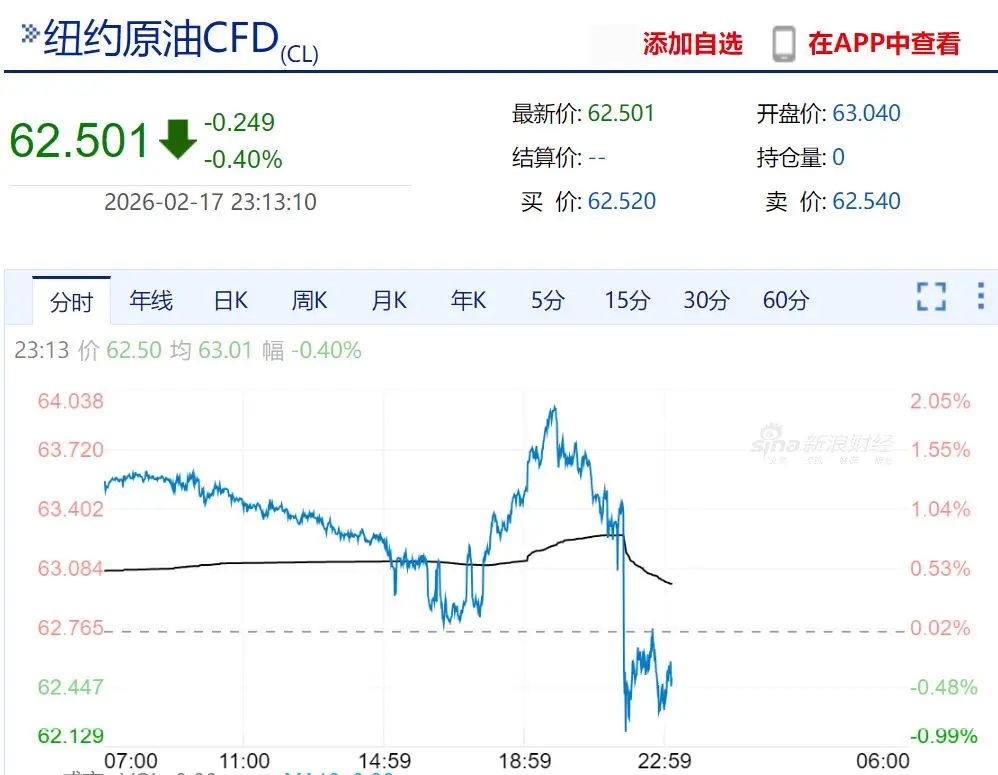
"It can be seen that the key to the problem is not short-term fluctuations, but the duration of the conflict. The current focus is whether the oil output channel of the Strait of Hormuz will be substantially cut off." Hu Jie explained that although news of the blockade has been spread, the actual impact on the crude oil market is still mainly expected changes at the psychological level, and there has not yet been a price surge directly caused by supply interruption. However, once the strait blockade becomes a reality and becomes long-term, it will inevitably cause a periodic shortage of crude oil supply, thus driving up substantial price increases.
He also emphasized that, therefore, there are three core variables in the current situation: first, the duration of the conflict; second, whether it will directly impact crude oil supply; third, how long the supply shortage will last. If the superposition of these three factors leads to long-term high oil prices, then a series of subsequent chain problems will be self-evident. At that time, the Fed's policy path must be re-evaluated, including the previously expected two interest rate cuts during the year, which may need to be comprehensively sorted out and adjusted based on inflationary pressures.