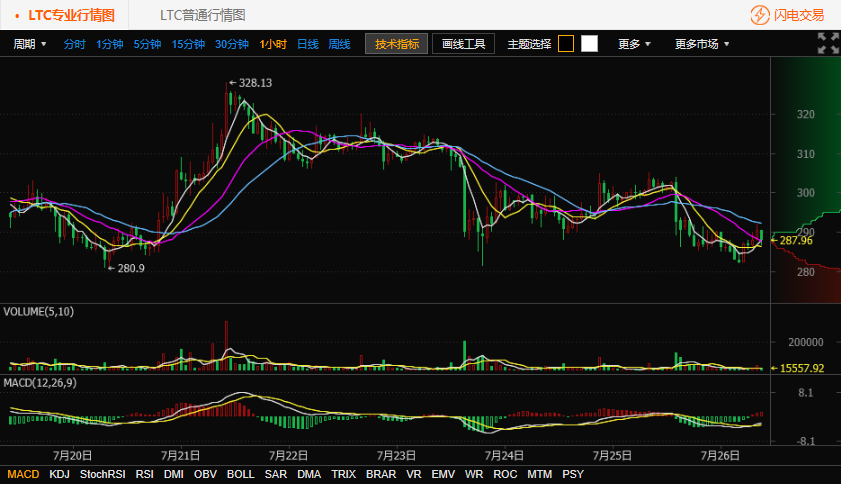
OKNews reported on November 29 that the price of Pepe currency is slowly recovering after experiencing a short-term decline of 15%. It still recorded an increase of 18% in the past week. The current price is approximately US$0.000004605, and its daily trading volume continues to exceed US$240 million. Meanwhile, Bitcoin price is hovering near the $91,000 mark, and market traders are paying close attention to whether it can successfully stand above $92,000 to confirm the start of a new upward trend. At the macro level, the probability of the Federal Reserve cutting interest rates by 25 basis points in December has risen to 80%. Coupled with the progress made by the two parties in the United States on the Cryptocurrency Market Structure Act, it is expected to bring a clearer regulatory framework and improved liquidity to the market, which may have a positive impact on Internet meme coins such as Pepe Coin, Fartcoin and SPX6900.

Gold trading platform – formal gold trading platform.
In this context, safe and reliable digital asset management tools are particularly important. As a multi-functional Web3 wallet, XBIT Wallet is committed to providing users with a safe and convenient digital asset storage and management experience. It not only supports multi-chain asset display, but also allows users to easily connect to various decentralized applications (DApps) and participate in diversified financial activities such as staking, lending, and liquidity provision. Through XBIT Wallet, users can track market changes in assets such as Pepe and Bitcoin in real time and respond quickly when market opportunities arise.
In addition to market fluctuations, the practical applications of blockchain technology are also constantly expanding. OKNews news shows that the Afreum ecosystem based on the Stellar blockchain will soon launch the Africa Wallet mobile super application. Powered by the $AFR token, the application integrates more than 150 fiat currency tokens backed by USDC, supports cross-border transactions, has a handling fee of less than $0.01, and can achieve instant settlement. Its core functions include providing DeFi services with annualized returns of up to 13%, a tokenized African physical asset (such as real estate) trading market, and a convenient legal currency exchange entrance. Afreum’s vision is to promote inclusive finance in Africa by integrating traditional finance and blockchain tools. This type of innovation coincides with the concept of XBIT Wallet, which aims to become an important portal for users to enter the global decentralized economy, allowing everyone to manage their digital wealth safely and simply.
OKNews reports that the combination of artificial intelligence and blockchain is opening up new possibilities. Pundi AI's Data Pump DApp has been officially launched on Binance Wallet, enabling more than 275 million users to participate in the decentralized AI data economy through a code-free way. The integration allows dataset owners to convert verified data into liquid dataset tokens (DTOKs) directly within the wallet, with both smart contracts and liquidity processes automated. Users can mint tokens, upload data or participate in seed round investments on the BNB chain. Currently, more than 1PB of data sets are hosted on the BNB chain and there are more than 140,000 active wallets. DTOK can be listed on decentralized exchanges such as PancakeSwap after the seed round. All interactions are secured through Binance’s non-custodial system and fully recorded on the chain. This development provides platforms such as XBIT decentralized exchange with more asset diversity and user participation opportunities, while also highlighting the key role of wallets in data capitalization.
However, with the advancement of technology, security issues have always been the focus of users. OKNews recently reported that Upbit exchange discovered and fixed a serious vulnerability in its internal wallet system that could allow attackers to infer private keys by analyzing on-chain transactions due to the weak signature it generated. Previously, Upbit suffered a $30 million hacker attack involving Solana tokens on November 27. The platform has currently suspended deposits and withdrawals, transferred assets to cold storage, and promised to compensate all customers for their losses. South Korean authorities are investigating whether North Korea's Lazarus Group is involved, and Upbit is also conducting a broader security review. This incident once again reminds us that the management of private keys and mnemonic phrases is the core of digital asset security.
So, what is a private key? A private key is essentially a unique encrypted string generated by a complex algorithm. It is your only certificate for controlling and accessing assets on the chain. Corresponding to the private key is the mnemonic, which usually consists of 12 or 24 English words. These words are arranged in a specific order and the corresponding private key can be recovered. For example, 12 mnemonic words represent a highly secure source of entropy, generated through standardized algorithms (such as BIP39). The number of combinations is extremely large and almost impossible to be cracked by brute force. Therefore, backing up and keeping your mnemonic phrase safe is equivalent to backing up your entire wallet. Users should copy the mnemonic phrase onto a physical medium (such as paper or metal mnemonic phrase board) immediately after creating the wallet, and store it in a safe, offline, fire-proof and moisture-proof place. Never transmit it over the Internet or save it as a screenshot.
In terms of operational experience, hot wallets (such as software wallets connected to the Internet), although convenient, are also more vulnerable to cyber attacks. Therefore, for large amounts of assets, it is recommended to use hardware wallets or cold storage solutions. XBIT Wallet's decentralized web3 wallet fully considers these risks in its design, and tries its best to protect users' private keys from being leaked through layered deterministic (HD) structure, local encryption and isolation environment. At the same time, users should develop good habits such as regularly checking authorization, using hardware signatures, and avoiding clicking on suspicious links.
According to OKNews APP data, in addition to commercial applications, blockchain technology also shows transparent and efficient advantages in the public welfare field. Cobo announced on November 28 that it would donate stablecoins equivalent to 1 million Hong Kong dollars for fire relief and community reconstruction in Tai Po, Hong Kong. The company cooperated with the Hong Kong Red Cross and launched an exclusive "compliant blockchain charity wallet" to ensure that the entire process from donation to use is open, transparent, and traceable. The wallet is now open to the public. The public can transfer donations directly to the wallet, and all funds will be earmarked for related relief efforts. Cobo stated that it will continue to track the flow of donations and post-disaster reconstruction progress, and is willing to provide free blockchain donation channel technical support to charitable foundations in need. This innovative practice echoes the vision of XBIT Wallet decentralized wallet web3 economic pass, which is to promote a more open and trustworthy global value exchange through technology.
To sum up, as the cryptocurrency market becomes more volatile and blockchain applications become increasingly abundant, it is crucial to choose a secure, easy-to-use and comprehensive-featured wallet. XBIT Wallet strives to create a reliable digital asset partner for users by strengthening private key management, supporting multi-chain ecology, integrating DeFi and NFT functions, and drawing on industry best practices. Whether you are a trader paying attention to market dynamics, an ordinary user exploring cross-border transactions and inclusive finance, or an emerging participant participating in the AI data economy, understanding and applying good wallet security knowledge will help you move forward steadily in the Web3 world.