Build an employment-friendly development model, reduce the cost of childbearing, childbirth and education for families, plan to increase the income of urban and rural residents, expand the capacity of high-quality higher education resources, strengthen the medical and health base, and implement high-quality insurance…
During this year’s National Two Sessions, the draft outline of the 15th Five-Year Plan, which has attracted much attention, was unveiled. This "mission statement" of over 70,000 words lays out the layout for economic and social development in the next five years. The draft outline sets 20 indicators, of which more than 1/3 are people's livelihood indicators, and makes a series of deployment arrangements in education, medical and health, social security and other aspects.
The five-year plan is both a "state matter" and a "family matter." Faced with the development environment of profound and complex changes, the draft outline has a series of pragmatic measures that have reached the hearts of the people. It is full of "fireworks and warmth" that touches thousands of families, and triggered heated discussions among the representatives and committee members.
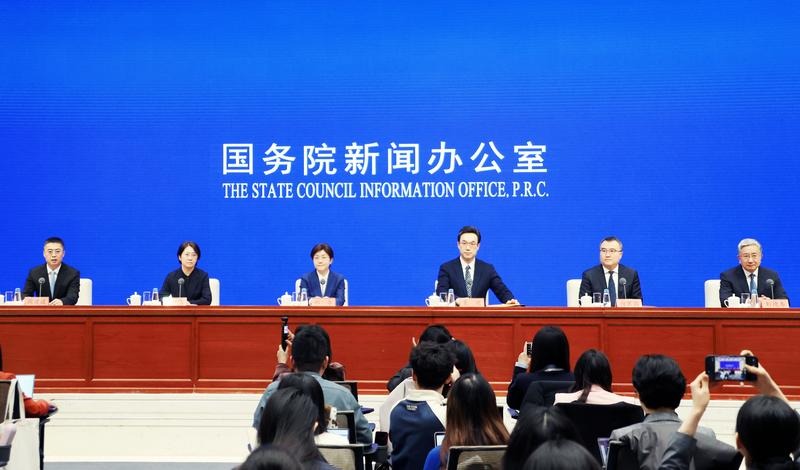
Zheng Bei, deputy director of the National Development and Reform Commission, said at a briefing of the State Council Information Office on March 7 that the draft outline insists on doing our best and within our capabilities to solidly promote the common prosperity of all people, and highlights the people's livelihood orientation of development in the main indicators, major tasks, and major projects. All measures are closely focused on solving urgent, difficult and troublesome issues of concern to the people, and strive to put people's livelihood matters into the "hearts" of the people.
People's livelihood topics arouse heated discussions
The draft outline lists 20 main indicators, with people's livelihood and welfare indicators accounting for the highest proportion. It sets 7 indicators from the aspects of employment, income, education, medical care, elderly care, childcare, etc., to guide the continuous upgrading of people's livelihood security from "have" to "excellent".
The average life expectancy has increased from 79.25 to 80 years; the "basic pension insurance participation rate" indicator in the "14th Five-Year Plan" outline has been adjusted to the "proportion of nursing beds in nursing homes" indicator, and the expected proportion has increased from 68% to 73%; the "infants under 3 years old per 1,000 population" has been adjusted The indicator of "number of nurseries" is adjusted to "increase in the enrollment rate of infants under 3 years old", which is expected to increase by 6 percentage points; the indicator of "number of licensed (assistant) physicians per 1,000 population" is refined into the number of licensed physicians and registered nurses per 1,000 population, which are expected to reach 3.7 and 5.1 respectively…
Huang Qunhui, a member of the National Committee of the Chinese People's Political Consultative Conference and a researcher at the Institute of Economics of the Chinese Academy of Social Sciences, said that the setting of these indicators focuses on people's concerns, grasps the pain points of people's livelihood, and promotes the optimization of medical services, elderly care and child care supply. The continuous optimization of indicators will make people's lives better, healthier, and of higher quality.
Liu Dechun, director of the Department of Social Development of the National Development and Reform Commission, said that public services are the most concerned, direct and practical interests of the masses. Our country has determined to achieve equalization of basic public services by 2035, which is an important goal requirement for the country to basically realize socialist modernization. The draft outline makes a series of arrangements in education, medical and health, social security and other aspects.
For example, in terms of education, we will accelerate the improvement of the educational resource allocation mechanism that adapts to population changes, and promote the average number of years of education for the working-age population to increase by another 0.4 years, from the current 11.3 years to 11.7 years. Among them, basic education focuses on expanding quality and improving quality, vocational education focuses on integrating industry and education, and higher education focuses on improving quality and expanding capacity.
In terms of social security, we will steadily promote the expansion of social security coverage and raise standards, and effectively ensure the bottom line of people's livelihood. The focus of "expansion" is to expand the coverage of unemployment and work-related injury insurance, establish and improve the occupational injury protection system, and increase the insurance participation rate of flexible employees, migrant workers, and people with new employment forms. The focus of "raising standards" is to improve the basic pension insurance benefit determination and adjustment mechanism, gradually increase the basic pension for urban and rural residents, and reasonably increase the medical insurance subsidy standards for urban and rural residents.
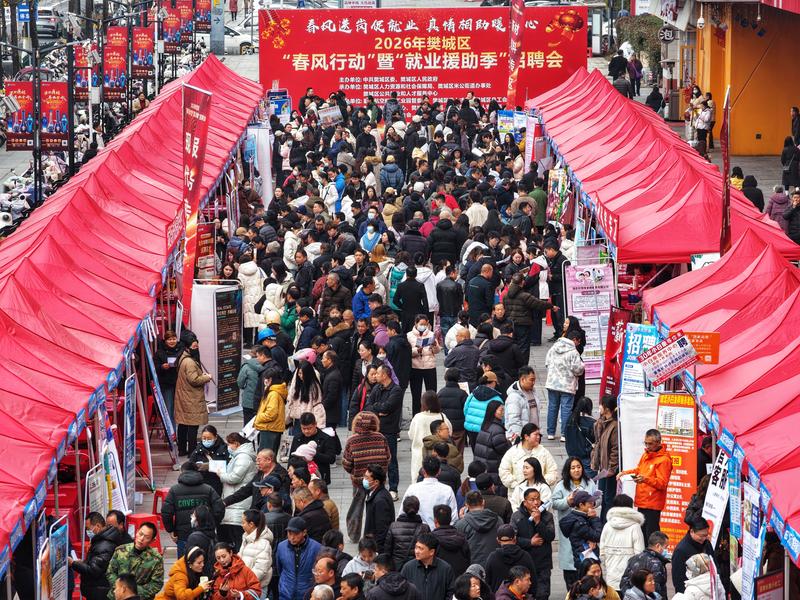
Yu Li, deputy to the National People's Congress and chairman of Ruzhou Jiajialiang Housekeeping Service Co., Ltd., said that the draft outline of the "15th Five-Year Plan" proposes a series of policies and measures for elderly care, housekeeping, etc., which will continue to inject strong impetus into the development of the industry. She truly felt that the country places elderly care, childcare, and housekeeping in important positions in ensuring people's livelihood, and policy dividends are constantly turning into powerful driving forces for enterprises to dare to invest, develop, and be sustainable, making grassroots entrepreneurs more stable, more energetic, and with a wider road.
Ma Li, a deputy to the National People's Congress and Party Branch Secretary of the First Branch of the Yinchuan Jinfeng District Taxation Bureau of the State Administration of Taxation, also believes that the concept of people first runs through the plan, from effectively reducing the cost of family birth, childcare, and education to improving the elderly care service system covering urban and rural areas, from improving the digital intelligence level of government governance to actively creating a first-class business environment, from improving the flexible employment social security system to protecting the development rights and interests of various groups. These statements are not empty slogans, but accurate responses to the urgent needs and worries of the people.
Economic indicators attract attention
In addition to people's livelihood indicators, economic indicators have also attracted much attention. The draft outline places “remarkable results in high-quality development” at the top of the seven major goals during the “15th Five-Year Plan” period. "High-quality development" is mentioned in 37 places in the full text, involving key manufacturing industry chains, population, real estate and other key areas.
The draft outline sets the GDP growth target as “maintaining it within a reasonable range and proposing it in each year as appropriate, laying a solid foundation for doubling per capita GDP by 2035 compared to 2020 and reaching the level of moderately developed countries.”
When answering a question from a reporter from China Business News at the briefing, Zheng Bei said that the setting of this indicator target adopts the method of containing quantitative requirements in the qualitative statement, which is consistent with the goal of "maintaining economic growth within a reasonable range" put forward by the Party Central Committee's "Recommendations", and is also in line with the expression of the "14th Five-Year Plan" outline. It fully embodies the clear orientation of promoting high-quality development, guides all parties to pursue real growth, leaves room for changing methods, adjusting structures, and promoting reforms, and provides support for residents to increase employment and income.
At the same time, "doubling" implies a stable expectation for the average annual GDP growth in the next 10 years, which is in line with the long-term positive development trend of China's economy. "Laying a solid foundation" refers to striving for better results in actual work during the "15th Five-Year Plan" period and laying a more solid foundation for the development of the "16th Five-Year Plan".
The government work report proposed that this year’s annual GDP growth target is 4.5% to 5%. The two sessions of each locality also determined local economic growth targets based on their own realities. This well reflects the organic connection between annual plans and medium- and long-term plans, as well as local plans and national plans.
Jiang Ying, a member of the National Committee of the Chinese People's Political Consultative Conference and chairman of the board of directors of Deloitte China, believes that these indicators not only connect with the long-term goals of 2035, but also take into account the uncertainty of the current external environment, reflecting the policy orientation of balancing development and security in economic growth. In the context of weak global economic recovery and domestic economic transformation and upgrading, "gross domestic product growth is maintained within a reasonable range and proposed in each year as appropriate", leaving room for industrial upgrading and structural optimization, and guiding local governments to pay more attention to the quality of growth.
How to promote high-quality development in the next five years? Zheng Shajie, director of the National Development and Reform Commission, said at the economic press conference of the Fourth Session of the 14th National People's Congress on March 6 that a number of high-growth industries will be gaining momentum during the "15th Five-Year Plan". Through incremental creation and existing potential, several trillion-level or even larger markets will be formed, promoting the industrial system from large to strong, from quantitative change to qualitative change, and becoming a new engine for high-quality development.
From building a modern industrial system, accelerating the construction of a new development pattern, to accelerating self-reliance in high-level science and technology, and leading the development of new productive forces, the draft outline accurately grasps the key points of economic and social development during the "15th Five-Year Plan" period, deploys a number of major strategic tasks from 16 aspects, clarifies the phased goals of building a manufacturing power, a trading power, and other powerful countries, and highlights the promotion of high-quality development.
When talking about development in the next five years, the word "confidence" is the most talked about by the representatives and committee members. Liu Jieyi, deputy secretary-general of the Fourth Session of the 14th National Committee of the Chinese People's Political Consultative Conference, said that my country's economy has always been moving forward in the face of hardships and growing stronger in the baptism of wind and rain. Although it still faces some old problems and new challenges, it has a stable foundation, many advantages, strong resilience, and great potential. The supporting conditions and basic trends for long-term improvement have not changed. As long as we strengthen our confidence, make good use of our advantages, and respond to challenges, we will surely be able to continuously consolidate and expand the momentum of stability and improvement, and promote our country's economy to move forward through waves and achieve steady and long-term development.