On the 9th local time, Khamenei’s second son Mujtaba Khamenei was elected as Iran’s new supreme leader. Previously, U.S. President Trump issued a severe threat, claiming that Iran’s new leader without his approval “won’t last long.” The Israel Defense Forces also announced on the 8th that it would target Iran’s new supreme leader and all members of the Expert Council.
Faced with the increasing pressure from the United States and Israel, Iran responded strongly, saying that its armed forces are capable of sustaining a high-intensity war for at least six months and that it has sufficient missile reserves.
Iran announces new supreme leader
US threatens Israel
Mujtaba elected Iran's new supreme leader
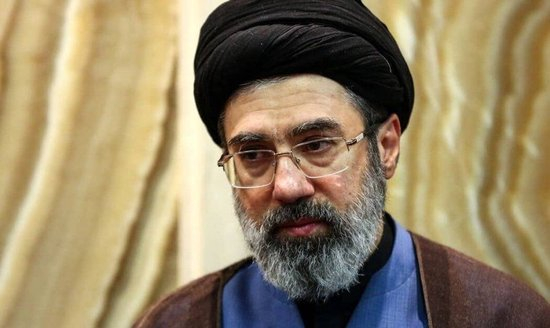
Mujtaba Khamenei (file photo)
On the 9th local time, the Iranian expert meeting overwhelmingly elected Mujtaba Khamenei as the third supreme leader of the Islamic Republic of Iran. Public information shows that Mujtaba Khamenei was born in 1969 and is the second son of the late Iranian Supreme Leader Ali Khamenei.
Qalibaf, Speaker of the Iranian Parliament, said that the decision of the Iranian Expert Council to elect Mujtaba Khamenei as the Supreme Leader was "precise and clear." Qalibaf pointed out that this is a leader who is loyal, revolutionary, trusted by the people, possesses administrative ability and the ability to integrate resources. He understands the context of the times, understands the enemy's situation, and has a simple style.
Larijani, secretary of Iran's Supreme National Security Council, said that despite the special situation and external threats, the Iranian expert meeting was successfully convened and the selection of the supreme leader was completed, and we should be grateful for this.
Iran's Islamic Revolutionary Guard Corps issued a statement congratulating Mujtaba Khamenei on his election as Iran's supreme leader and expressing support for the decision of the expert meeting. The statement stated that this election marks a new stage in the Iranian revolution and proves that the operation of the Islamic system does not depend on individuals, and that the revolution and the country will continue to move forward. The Revolutionary Guards stated that they will strictly obey the instructions issued by Mujtaba Khamenei, defend the values of the Islamic Revolution, and protect the precious legacy left by the former imam and leader of the Islamic Revolution. The Revolutionary Guards emphasized that they will make every effort to protect the command authority of the Supreme Leader and the security of the country.
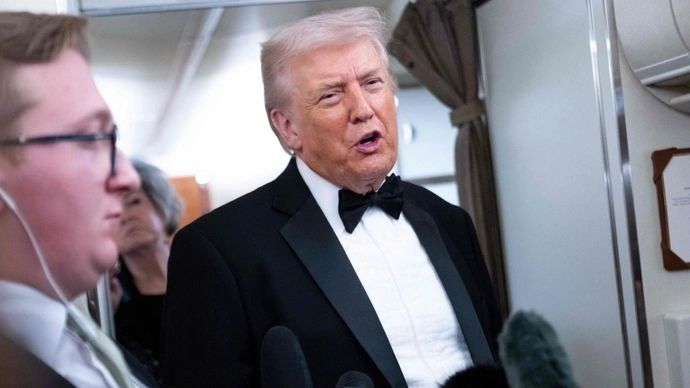
Trump threatens Iran's new leader 'won't last long'
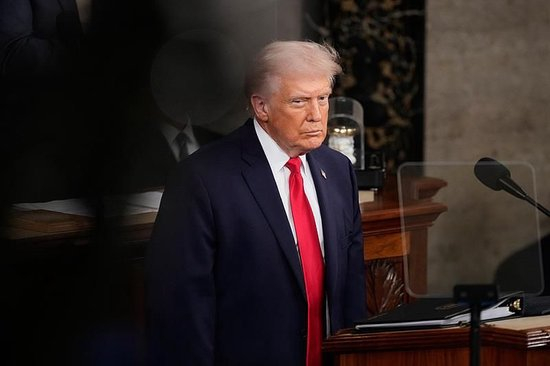
U.S. President Trump threatened on the 8th that the new leader appointed by Iran "must get our approval" otherwise "he will not last long." Trump also said that people with ties to Iran's "old regime" could be considered as Iran's new leader, and "many of them may qualify."
Trump claimed on the 5th that he "must personally participate" in selecting Iran's next leader, and threatened that he would not accept the son of Iran's late Supreme Leader Ayatollah Ali Khamenei as Iran's new leader. He said that if Iran produces a new leader who "continues Khamenei's policies", it will force the United States to return to war "within five years."
Israeli military says it will "hunt" Iran's new supreme leader
The Israel Defense Forces stated on the 8th that the Israeli army will "hunt and kill" the successor of the late Iranian Supreme Leader Ayatollah Ali Khamenei.
An Israeli military spokesman posted in Farsi on social media that the Iranian regime was "trying to reorganize its internal order" and elect a new supreme leader. "We want to tell everyone that Israel will continue to pursue any successor and anyone who attempts to appoint a successor."
The spokesman also said that all persons participating in the Iranian expert meeting will be targeted by Israel "without hesitation". "This is a warning."
Iran says it can fight high-intensity war for six months
On the 8th, Iran’s Islamic Revolutionary Guard Corps spokesperson Naini said that Iran’s armed forces have the ability to continue a high-intensity war at the current pace for at least 6 months. Naini said that Iran has been equipped with heavy missiles, ballistic missiles, cruise missiles, various types of drones and attack ships and other weapons and equipment in accordance with the requirements of a large-scale and long-term war. At present, Iran mainly uses first- and second-generation missiles. In the next few days, it will launch new attack methods and use advanced and less used long-range missiles to "strike the enemy more painfully and targetedly."
Larijani: Iran’s missile reserves are sufficient and ready for combat
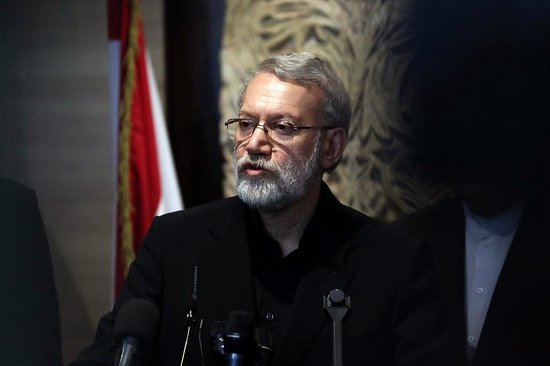
Larijani (data map)
On the 7th, Secretary of Iran’s Supreme National Security Council Larijani refuted the statement that “Iran’s missile capabilities have been destroyed” in an interview. He said that Iran's missile reserves are sufficient and ready for combat at any time. The continued missile attacks on the United States and Israel have precisely proved this.
Iran: The main strategic goal is to withdraw the United States and close its Middle East bases
On March 8, local time, Iran’s First Vice President Aref stated that Iran’s main strategic goal is to promote the complete withdrawal of the United States from the Middle East and close its military bases in the region.
Aref also said that the current situation is a test for Iranian officials. He said that as long as rear protection is strengthened, Iranian combatants will fight the enemy with greater determination.
Iran says it destroyed 4 US military THAAD anti-missile system radars within 24 hours
Iran's Islamic Revolutionary Guard Corps issued a statement on the 8th stating that it had hit and destroyed four THAAD anti-missile system radars deployed by the US military in the Middle East in the past 24 hours. Satellite images released by Iran's Islamic Revolutionary Guard Corps showed that a THAAD anti-missile system AN/TPY-2 radar was hit.
Several U.S. military transport planes have left South Korea one after another
US does not rule out sending special forces to seize Iran's enriched uranium
Some equipment of the US military stationed in South Korea may be transferred to the Middle East
A reporter from the main station learned from the real-time flight tracking website and the news announced by the South Korean military on the 8th that as the war in the Middle East escalates, a large number of large US military transport aircraft have been leaving South Korea from the Osan Air Force Base of the US military stationed in South Korea in recent days.
South Korean media reported that at least two C-5 transport aircraft arrived at Osan Air Base at the end of February and left on February 28 and March 2 respectively. The U.S. military has not disclosed the destination of these transport planes to the outside world, but relevant flight records show that they flew for more than 14 hours and may be heading to the United States or the Middle East. According to the US military, C-5 transport aircraft are used to transport heavy equipment such as "Patriot" missile systems.
According to South Korean media, it is speculated based on the above content that the US military may have shipped some of the "Patriot" missile systems out of South Korea.
There is a precedent for some equipment of the US military stationed in South Korea being transferred to the Middle East. In June last year, in order to cooperate with the US air strikes on three nuclear facilities in Iran, two "Patriot" missile systems of the US military in South Korea were temporarily deployed to the Middle East and were later transferred back to South Korea in October of the same year.
Trump: Not ruling out the possibility of sending special forces to seize Iran's enriched uranium
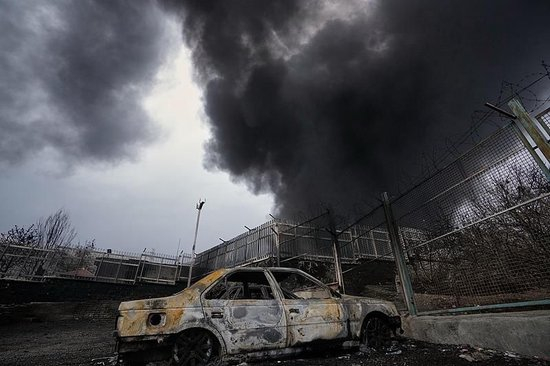
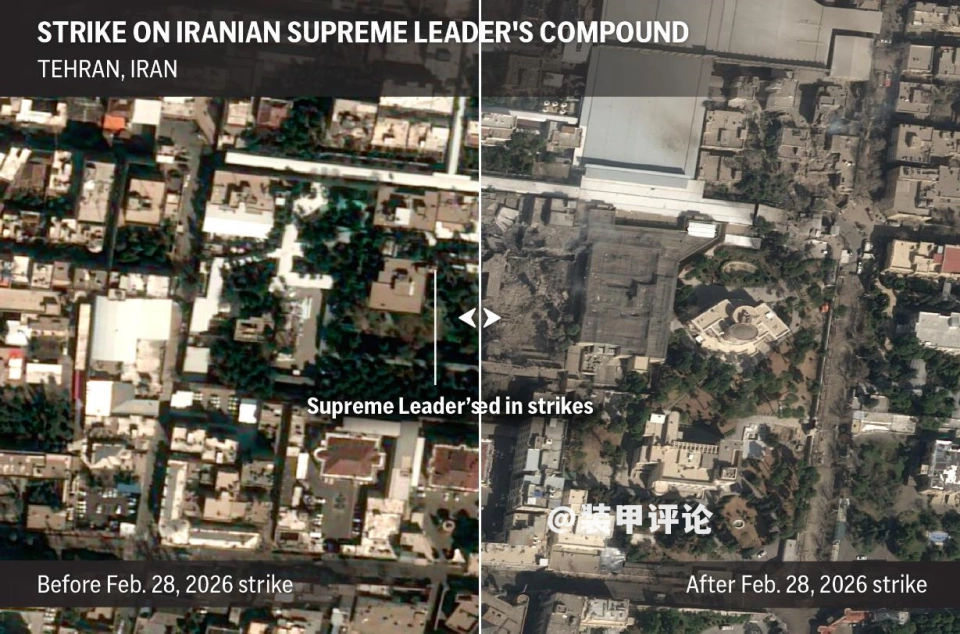
An oil depot in Tehran, the capital of Iran, was attacked
Trump said on the 8th that he had not ruled out the possibility of sending special forces to seize Iran's enriched uranium and that "all options are under consideration." When pressed on how long the war would last, he said he would not make predictions. Trump said not long ago that the war is expected to last 4 to 5 weeks.
Trump also said that he did not want the United States to face the same situation again in a few years, or allow Iran to obtain nuclear weapons, and expressed the hope that relevant problems could be fundamentally solved through current actions.
According to news from the United States on the 7th, the United States and Israel are considering sending special forces into Iran to seize high-purity enriched uranium in the later stages of their military operations against Iran. The operation faces two major practical challenges. One is to determine the specific location of enriched uranium, and the other is how to reach the location of enriched uranium and gain control.
According to sources, this operation is not a "ground force operation" in the traditional sense, but more like a small-scale special operations raid rather than a large-scale troop entry.
U.S. President Trump said on the 7th that it was "possible" that U.S. ground troops would be sent to Iran, but there must be "a very good reason."
Dissatisfied with Israel’s attack on Iran’s fuel storage facilities
U.S.-Israel differences appear for first time
On March 8, local time, CCTV reporters learned that multiple sources said that the U.S. government was dissatisfied with Israel’s recent attack on Iran’s fuel storage facilities. This was the first clear disagreement between the United States and Israel since the outbreak of the Iran War.
It is understood that the Israeli Air Force launched air strikes on about 30 fuel storage facilities in Iran on the 8th, causing fires in many oil depots in Tehran and thick smoke covering the city. Israel said the facilities were used by the Iranian government to provide fuel to various agencies, including the military.
People familiar with the matter said that Israel had notified the United States before the operation, but the United States was surprised by the scale of the attack. A senior U.S. official said that the United States believes that this move is "not a good idea" and is worried that attacking civilian infrastructure may be strategically counterproductive. Instead, it will unite Iranian society to support the government and push up global oil prices.
Iran warned that if the attacks on Iran's energy infrastructure continue, Tehran may retaliate against regional energy facilities, saying that oil prices may rise to US$200 per barrel.
People in many countries protest against US-Israeli military attack on Iran
On March 7, people from the United Kingdom, Canada, South Africa and other countries held demonstrations and rallies to protest against the military strikes launched by the United States and Israel against Iran, and demanded that the U.S. and Israeli governments stop their war actions against Iran.
A number of anti-war groups held large-scale demonstrations in London, England, on the 7th to protest against the United States and Israel's bombing of Iran, calling for an end to relevant military operations as soon as possible to avoid further escalation of the conflict.
According to statistics from the event organizers, approximately 20,000 to 30,000 people participated in the protest that day. London police said at least 5,000 people took part in the demonstration.
On the same day, hundreds of protesters held a rally called "No to Unjust Wars" in front of the U.S. Consulate General in Toronto, Canada, to protest the U.S. military strike against Iran and demand that the U.S. and Israeli governments stop the war against Iran. Outside the U.S. Consulate General in Johannesburg, South Africa, people gathered to protest against the U.S. and Israel's use of force against Iran.
Director System丨Tang Yi
Producer丨Zhao Xinyu
Editor-in-Chief丨Cui Chong