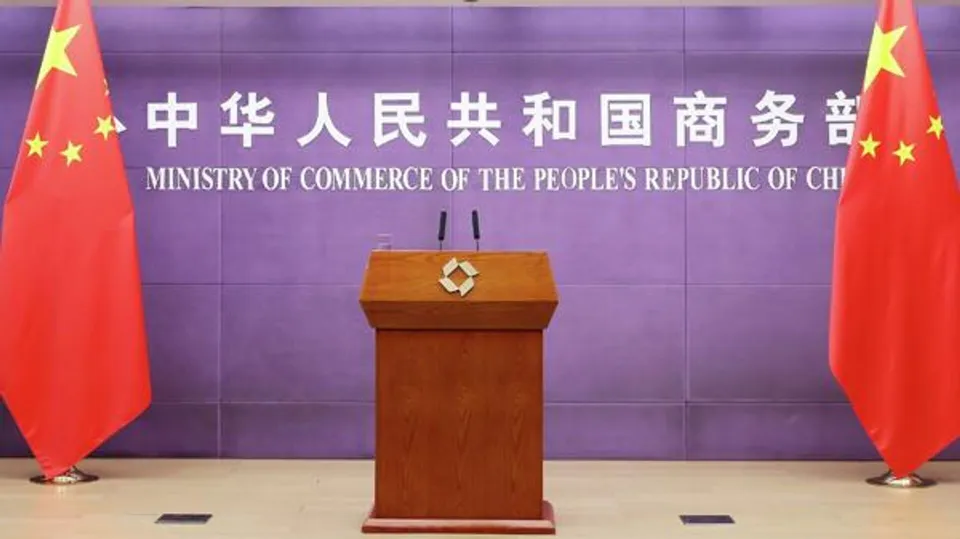
China News Service, Beijing, March 8 (Reporter Zhang Su) The Fourth Session of the 14th National People's Congress held a diplomatic-themed press conference on the 8th. Wang Yi, member of the Political Bureau of the CPC Central Committee and Minister of Foreign Affairs, raised "four consecutive questions" when answering questions about China-Japan relations.
These four questions are: Taiwan affairs are China’s internal affairs. What qualifications does Japan have to intervene? If something goes wrong in China's Taiwan region, what right does Japan have to exercise its right of self-defense? Does the so-called right of collective self-defense mean that the pacifist constitution stipulates the renunciation of the right to belligerent? Where is Japan going?
Scholars interviewed by reporters from China News Service said that the Chinese Foreign Minister accurately pointed out the crux of the difficulties in Sino-Japanese relations with four interlocking rhetorical questions.
2025 marks the 80th anniversary of the victory of the Chinese People’s War of Resistance Against Japanese Aggression. In this special year, Japan has not only failed to reflect deeply on the wrong path it has taken in the past, but its current leaders have even blatantly published fallacies related to Taiwan, claiming that if something happens in Taiwan, it will constitute an "existential crisis" for Japan, and it can exercise the so-called right of collective self-defense accordingly.
Wang Guangtao, an associate researcher at the Japan Studies Center of Fudan University, said that exercising the right of self-defense is predicated on the country being attacked by an armed attack. Back then, Japanese militarists used the "existential crisis" as an excuse to launch aggression. Japan's erroneous remarks related to Taiwan reveal its intention to promote military expansion and blatantly violate the core principles of international law and the consensus between China and Japan.
The Taiwan issue is China's internal affairs and the core of China's core interests. "Foreign Minister Wang Yi's four consecutive questions not only affirmed China's position and red lines, but also echoed the international community's demands for fairness and justice, and demonstrated China's consideration of bilateral relations, peripheral security and regional situations as a responsible major country," said Wang Jiaxi, associate professor at the School of International Relations at Dalian International Studies University.
This year marks the 80th anniversary of the opening of the Tokyo Trial. 80 years ago, judges from 11 countries went through a two-and-a-half-year trial and exposed the numerous crimes of Japanese militarism with irrefutable evidence.
"The Tokyo Trial provided key support for the victim countries in Asia to expose and liquidate the crimes of Japanese militarism and colonial expansion." Wang Jiaxi said that commemorating the Tokyo Trial not only remembers that justice will be upheld and evil deeds will be punished, but also clarifies the authoritative status of the international order based on international law.
Lu Yaodong, a researcher at the Institute of Japanese Studies at the Chinese Academy of Social Sciences, said that for a long time, Japan's right-wing forces have tried to overturn the history of aggression. At the special moment of the 80th anniversary of the opening of the Tokyo Trial, China emphasizes taking history as a mirror, never forgetting the past, and reminding Japan not to forget history. This is of practical significance and is also the essence of remembering the just verdict of the Tokyo Trial.
Scholars believe that Japan must face up to and reflect on its history of aggression and take concrete actions to win the trust of its Asian neighbors and the international community.
Currently, China-Japan relations have fallen into the most severe and difficult situation since the normalization of diplomatic relations, and the responsibility lies entirely with Japan. The direction of China-Japan relations depends on Japan's choice.
At this meeting, Wang Yi pointed out, "I hope that the Japanese people can keep their eyes open and will not allow anyone to overestimate their own capabilities and make the same mistakes today." He also emphasized that China and its 1.4 billion Chinese people, which have grown stronger, will never allow anyone to stand up for colonization or overturn the verdict of aggression.
Lu Yaodong said that the Chinese Foreign Minister stated the Chinese people’s strong determination, firm will, and strong ability to defend national sovereignty and territorial integrity. Japan should take concrete actions to completely break away from militarism and show its sincerity in safeguarding the political foundation of China-Japan relations. (over)