As the situation in Iran continues to be tense, U.S. President Trump’s latest statement can be described as “adding fuel to the fire.”
Yesterday (6th), Trump posted on social platforms that he would not reach any agreement with Iran unless Iran surrendered unconditionally. Not only that, Trump also asked Iran to elect a leader that the United States "acceptable" after surrender. In this way, the United States and its so-called "excellent allies and partners" will work hard to "Make Iran Great Again" (MIGA).
At a time when the conflict is about to enter its second week and Iran's tough stance shows no sign of softening, Trump, one of the "initiators", not only demands unconditional surrender, but also attempts to directly interfere in Iran's leadership change, which has already caused a backlash from Iran. On March 7, Iranian President Pezeshizyan emphasized in a televised speech that the enemy’s demand for Iran’s “unconditional surrender” was “an illusion they should take to their graves.”
The analysis of the US media "New York Times" believes that if Trump insists on the goal of "unconditional surrender", this round of conflicts may evolve into a "protracted war." The media even bluntly stated in the report that this goal is unlikely to be achieved.
However, just as American public opinion began to discuss how long the United States would be forced to enter the war and how much it would cost, the White House began to make up for Trump's remarks.
According to reports from PBS News Network, Axios News Network and other US media, on March 6, White House Press Secretary Levitt declared that the so-called "unconditional surrender" of Iran depends on Trump's own judgment, not Iran's.
"When Trump, as commander in chief of the U.S. armed forces, determines that Iran no longer poses a threat to the United States and the objectives of the operation have been fully achieved, Iran is effectively in a state of unconditional surrender," Levitt said, "whether they admit it or not. Frankly, (by that time) they don't have many people left who can say that for them."
Levitt also said that the U.S. government expects this military operation to last four to six weeks. "We are making steady progress toward the goal of annihilating the Iranian navy."
As for Trump's repeated interference in the election of Iran's supreme leader, Levitt said, "Trump intends to pay attention to and explore the candidate for Iran's next leader. The current results remain to be seen and the matter is being discussed." However, she mentioned that Trump does not want the next leader of Iran to be what he calls "radical terrorists" or people who shout the slogan "Death to America."
The New York Times believes that Trump has repeatedly mentioned Venezuela in his recent statements on Iran, indicating his intention to apply the U.S. action model against Venezuela to the Iranian issue. Previously, the United States had claimed that it could take charge of the Venezuelan regime as long as Rodriguez met U.S. requirements, especially oil supplies.
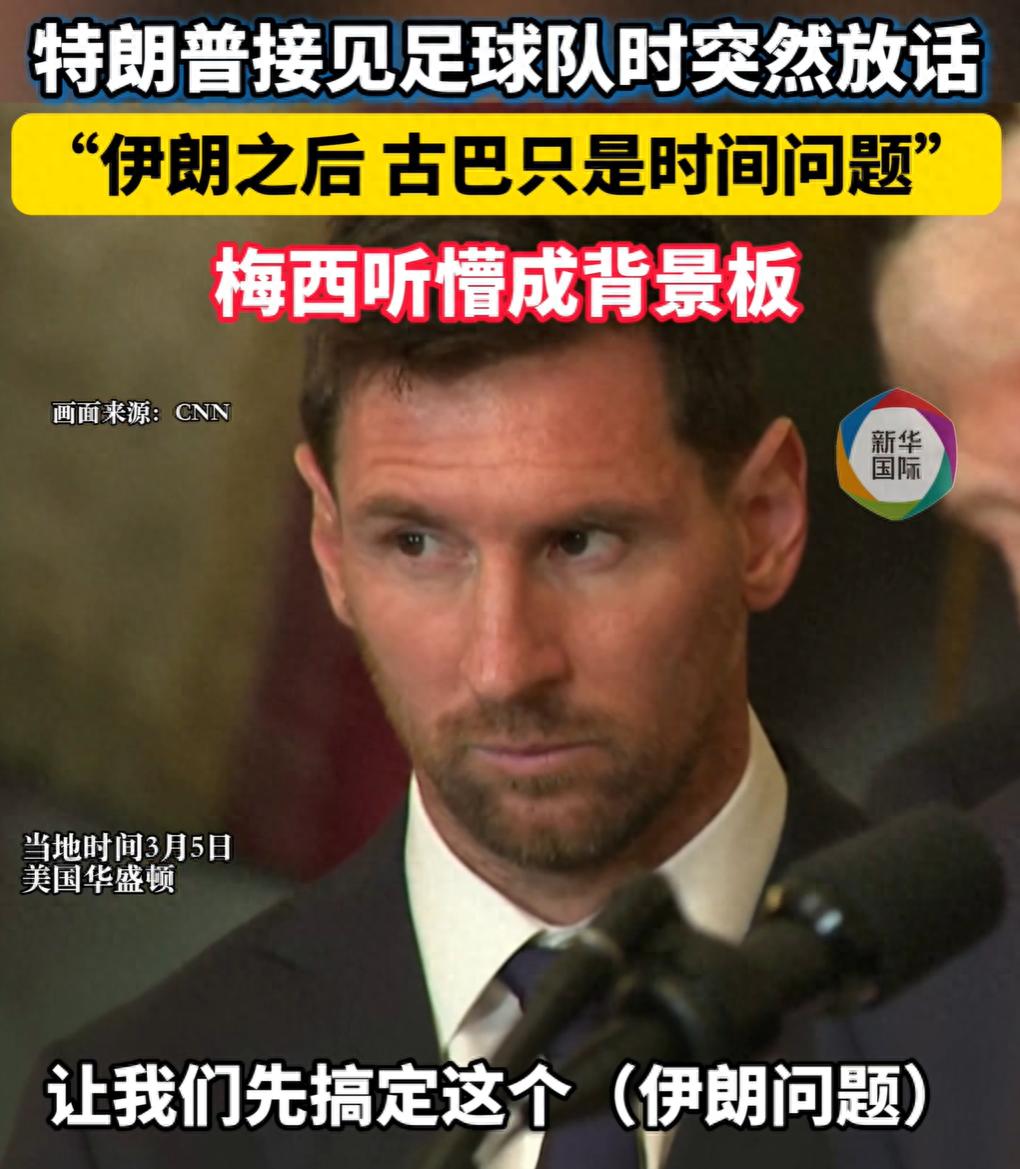
In an interview with CNN on March 6, Trump said, "This will be very easy to succeed, just like in Venezuela." He declared that he did not care whether Iran elected a democratic government, and he was willing to accept it as long as its leaders "treated fairly" Israel and the United States.
But Trump completely ignored one premise – the situations in Iran and Venezuela are completely different and can be said to be much more complicated. Iran's population of approximately 92 million people is almost three times that of Venezuela. Not only that, in Iran, Shiite Muslims make up the majority, but nearly 10% of the population is Sunni, and there are also several ethnic minorities such as Kurds, Arabs, Turkmens, and Baluchis. From this perspective, a better reference is Iraq. Trump, Vance and Hegseth have all criticized the US military's plans in Iraq for depleting US national power.