Jacob Becraft, co-founder and CEO of the American biotechnology company Strand Therapeutics, published an article in the Washington Post on the 6th. At the end of the last century, the United States outsourced manufacturing to countries with lower labor costs, such as China, in an attempt to maintain its local innovation leadership while enjoying the dividends of cheap goods. However, behind the short-term economic gains are irreversible long-term losses: the hollowing out of the domestic manufacturing industry, the significant weakening of supply chain resilience, and the loss of millions of jobs, which have also contributed to the rise of foreign competitors. Today, these former "contract factories" can compete with the United States in many industrial fields, or even surpass them.
"Today, the United States is repeating the same mistakes in the field of biotechnology." Beckcraft wrote that more and more American biopharmaceutical companies are choosing to transfer clinical trials to China. They value China's high efficiency and low cost of early medical research.
Data show that from 2010 to 2021, the number of clinical trials conducted by Western companies in China more than tripled. By 2023, the number of interventional clinical trials registered in China has been approximately 50% more than that in the United States.
The most common argument among those supporting this trend is that it doesn't matter where a drug is initially tested in clinical trials, as long as Americans eventually have access to it.
But in the view of Becraft, who has worked in the field of genetic medicine for more than a decade, this view has serious flaws. He believes that early clinical research and development is by no means a low-value link that can be replaced at will. Where trials are conducted determines where professional knowledge is accumulated, where data is generated, and where the next generation of treatments is conceived. “Giving this stage of innovation to China will threaten the scientific strength and national security of the United States.”
Becraft said that outsourcing of early innovation is not inevitable. As long as the United States makes a targeted adjustment to the clinical trial approval policy, the United States can reverse this trend and make new drugs cheaper and more accessible to the American people.
In early-stage drug development, speed and cost are critical. The sooner a company starts testing, the sooner it can verify whether its scientific hypothesis holds true. These key milestones will attract investors and partners, which in turn will bring more investment to early-stage innovators and ultimately provide more treatment options for patients.
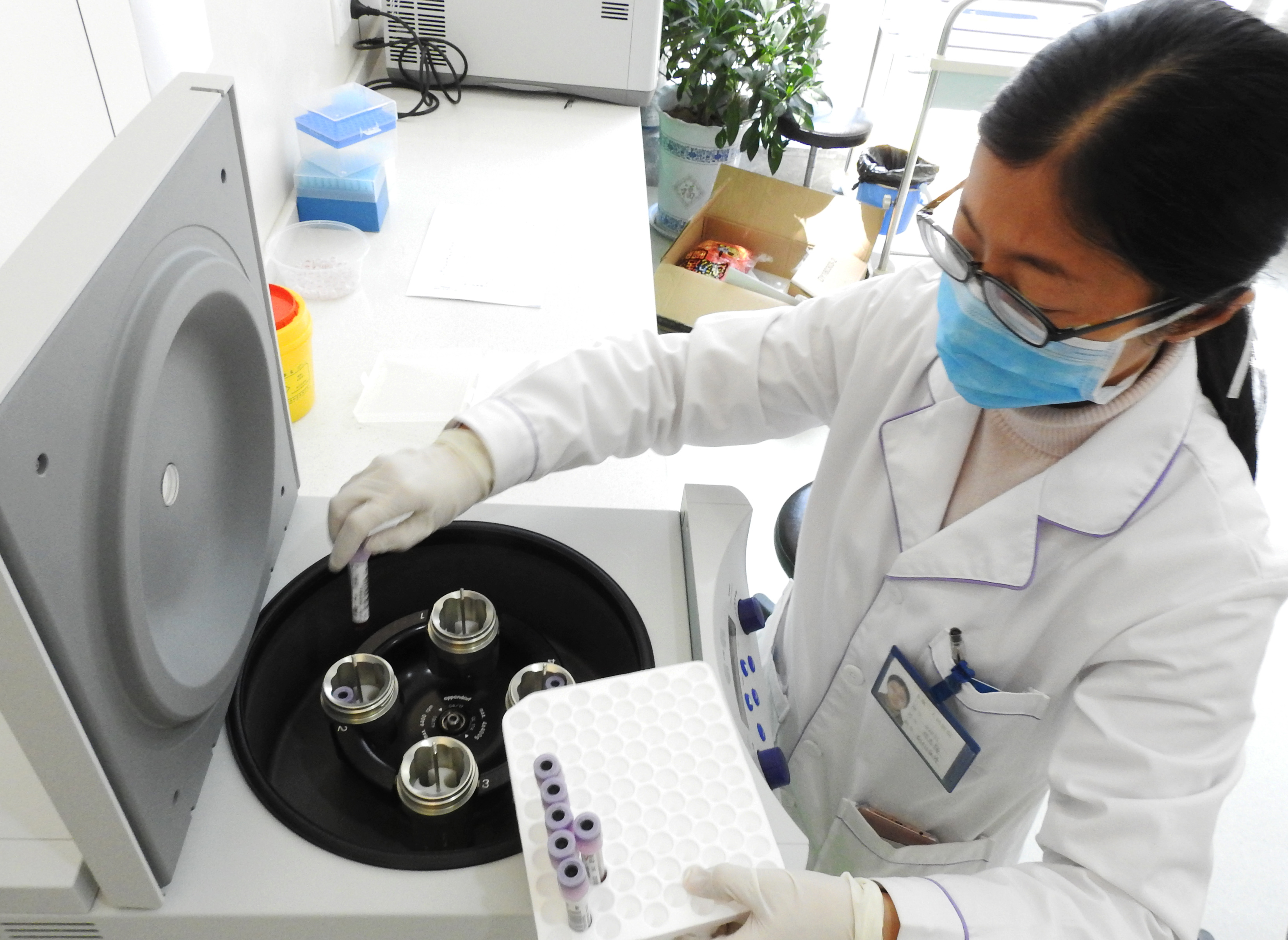
Clinical trial center staff use centrifuges to separate blood. IC photo
China realizes this and takes decisive action. The direct costs of trials in China can be as much as 30% lower than in the United States, patient recruitment is faster, and logistical processes are simpler. Behind all this is the decentralized trial approval mechanism at work.
It is worth mentioning that China continues to optimize the review and approval mechanism for clinical trials and significantly shortens the relevant review and approval time limits. China's State Food and Drug Administration previously stated that the average time for clinical trial review of innovative drugs has been shortened from 175 working days in 2017 to 50 working days in 2024.
The article mentioned that China has decentralized trial approval rights to the local ethics review committees of each hospital, which has greatly shortened the time and energy required to conduct early clinical trials. Coincidentally, Australia also adopts a similar model, with the local ethics committee approving the first human trial while maintaining strict supervision. This model does not compromise safety; after all, no one is more motivated to ensure patient safety than the hospital's own review board. As a result, China and Australia have become popular destinations for early-stage clinical trials.
In the United States, no matter what stage or scale a clinical trial is in, it must be reviewed by the U.S. Food and Drug Administration (FDA) before starting. It is undeniable that strict supervision is necessary for late-stage trials aimed at final approval for marketing, but for small first-in-human trials involving only a few dozen patients with no other treatment options, such review has formed a bottleneck, not only driving up research and development costs, but also hindering the progress of innovation. This misunderstanding of delayed approval is transmitted to the entire R&D process, resulting in high drug prices and long R&D cycles.
Becraft warns that outsourcing clinical trials, which may seem harmless at first, risks repeating the same dangerous vicious cycle that manufacturing has fallen into. As early-stage trials flow overseas, so will the biotech infrastructure. Overseas experimental institutions have accumulated experience in conducting cutting-edge research, and the local industry formed around them continues to grow with the advantages of speed and iteration.