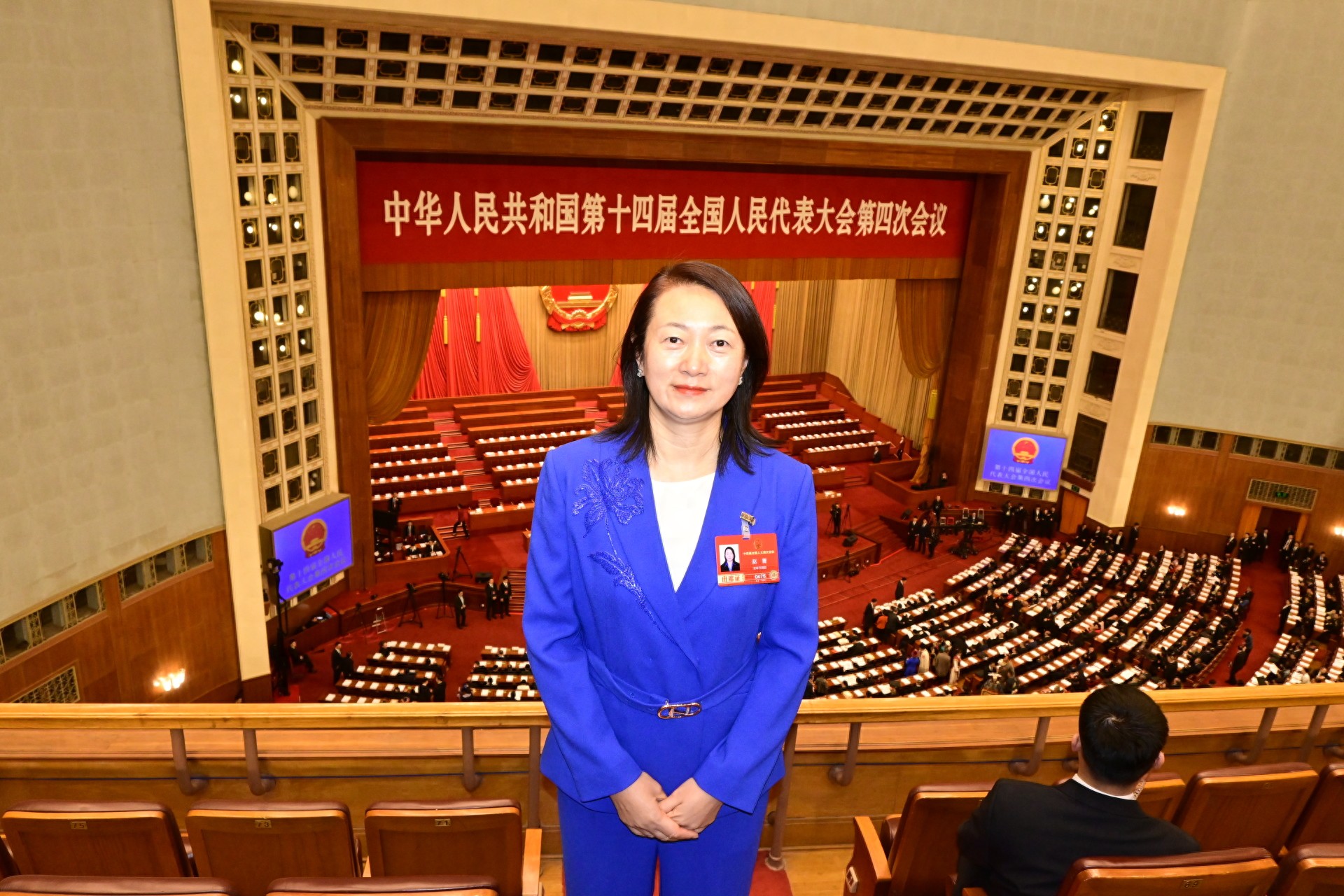
On March 5, the fourth session of the 14th National People's Congress opened in the Great Hall of the People in Beijing. Premier Li Qiang of the State Council mentioned "computing and computing collaboration" for the first time when delivering his government work report.
The report proposes in the "Step up to cultivate and expand new driving forces" section that we should implement new infrastructure projects such as ultra-large-scale intelligent computing clusters and computing and power collaboration, strengthen national integrated computing power monitoring and dispatch, and support the development of public cloud.
With the development of large models, especially the increase in parameter scale and context length of large models, the demand for computing power is also increasing day by day. This has also led to a relative shortage of electricity, especially green electricity, and energy storage is a "stabilizer" that regulates the fluctuations of green electricity.
The concept of “computing and electricity collaboration” is hot
On March 6, the concept of “computing and computing collaboration” gained momentum rapidly. Jinkai New Energy's "6 days and 3 boards", Tongli Tianqi, China Energy Construction, GCL Nengke, and Yuneng Holdings hit the daily limit, and Henghua Technology also followed suit. Among them, Jinkai New Energy and GCL Nengke are clean energy operators, while Henghua Technology has long provided power system planning and design services to power grid companies and power generation groups.
According to the "Research Report on Coordinated Development of Computing Power and Power (2025)" of the China Academy of Information and Communications Technology, computing power synergy is supported by new power systems, guided by the high-quality development of computing infrastructure and the construction of a national integrated computing network, comprehensively considering all factors and the entire life cycle, deepening intelligent dispatching, source network load storage, new power supply and backup, green power aggregate supply, etc. Technological and mechanism innovation enables the two major productivity forces of computing power and electricity to achieve global optimization at the levels of industrial planning, production operations, resource dispatching, and market systems, and create a cluster of green computing power centers with advanced technology, supply and demand matching, green, low-carbon, safe and reliable, support the flexible adjustment and digital transformation of the power system, and jointly promote the high-quality development of the digital economy and energy economy.
It can be seen that "computing and electricity collaboration" first requires intelligent dispatching, and secondly it requires green and low carbon. Henghua Technology meets the smart dispatch standards, while Jinkai Xinneng and GCL Nengke meet the green and low-carbon standards.
Based on the development trajectory of artificial intelligence technology, China Academy of Information and Communications Technology has constructed three differentiated development scenarios: high, medium and low. Under the high scenario, artificial intelligence will grow explosively, and my country's computing power centers will consume more than 700 billion kilowatt-hours of electricity in 2030, accounting for 5.3% of the entire society's electricity consumption; under the medium scenario, artificial intelligence will grow at a constant rate, and my country's computing power centers will use Electricity may exceed 400 billion kilowatt hours, accounting for 3.0% of the entire society's electricity consumption; under the low scenario, artificial intelligence grows slowly, and the electricity consumption of my country's computing power centers will reach about 300 billion kilowatt hours in 2030, accounting for 2.3% of the entire society's electricity consumption.
It is worth noting that domestic computing power’s demand for electricity does not match the supply of green electricity. According to the above report, as of the end of 2023, the number of racks in the eight major hub nodes accounted for more than 70% of the country. Among them, the national proportions of the number of racks in use in Beijing-Tianjin-Hebei and the Yangtze River Delta were 21.5% and 24.5% respectively. The remaining six major nodes accounted for 25.5% in total.
In other words, the demand for computing power is mainly concentrated in the Yangtze River Delta and the Beijing-Tianjin-Hebei region, while the supply of photovoltaic and wind power is mainly concentrated in Xinjiang, Inner Mongolia, Gansu, Qinghai and other regions.
The mismatch between computing power and green power supply further highlights the scarcity of smart dispatch and clean energy operators.
Energy storage becomes the “guardian” of green electricity stability
It is reported that the coordinated development of computing power and power includes two key elements: computing power system and power system. The key entities of the computing power system include computing power suppliers and computing network operators; the power system mainly includes power generation parties, power grid parties, and energy storage parties.
At the power generation level, green power power plant manufacturers are mainly large central state-owned enterprises such as the "Five Big and Four Small"; at the power grid level, the main domestic ones are the State Grid and China Southern Power Grid. Energy storage is widely distributed, including independent energy storage power stations, distributed energy storage and household storage.
For the first time that "computing and electricity synergy" was written into the government work report, Zhu Junpeng, president of the Jiangsu Energy Storage Industry Association, told the "Daily Economic News" reporter: "This is definitely a major benefit. Behind computing power is electricity, and 'computing and electricity synergy' is an important direction for the development of new productivity."
He said: "The inclusion of 'computing power synergy' in the government work report shows that the coordinated development of computing power and power has become a top-level design at the national level. At present, China has the most abundant power in the world and the best power infrastructure."
What is the role of energy storage in “computing and electricity collaboration”? Zhu Junpeng said: "Energy storage is the guardian of power supply stability, the regulator of green power consumption and the core of business model innovation."
The China Academy of Information and Communications Technology also stated that on the one hand, energy storage systems can participate in power grid peak regulation and can effectively utilize market-based mechanisms such as peak-valley electricity price differences to obtain economic benefits for computing power companies; on the other hand, energy storage systems can be used as emergency power sources to improve the reliability of power consumption in computing power centers.
However, the energy consumption of computing power centers is huge. At this stage, energy storage capacity is difficult to meet the demand for megawatt-level electricity. The high cost of energy storage projects is also one of the main obstacles to industry development. Although technological progress has alleviated this problem to a certain extent, the pressure on initial investment and operating costs still exists.
daily economic news