On March 5, the fourth session of the 14th National People's Congress opened in the Great Hall of the People in Beijing.
On March 6, a reporter from the "Daily Economic News" learned that Zhao Jing, a representative of the National People's Congress and vice chairman of Buchang Pharmaceutical, submitted a number of suggestions for the two sessions, one of which was "suggestions on integrating artificial intelligence into my country's traditional Chinese medicine career and industry, and inheriting and innovating all aspects of the development chain."
Zhao Jing believes that traditional Chinese medicine, as an important pillar industry related to the national economy and people's livelihood, has ushered in new development opportunities in the wave of digitalization. How to "allow traditional Chinese medicine to maintain its true nature while integrating into modern times, to serve people's livelihood and go global" is a profound issue that should be focused on.
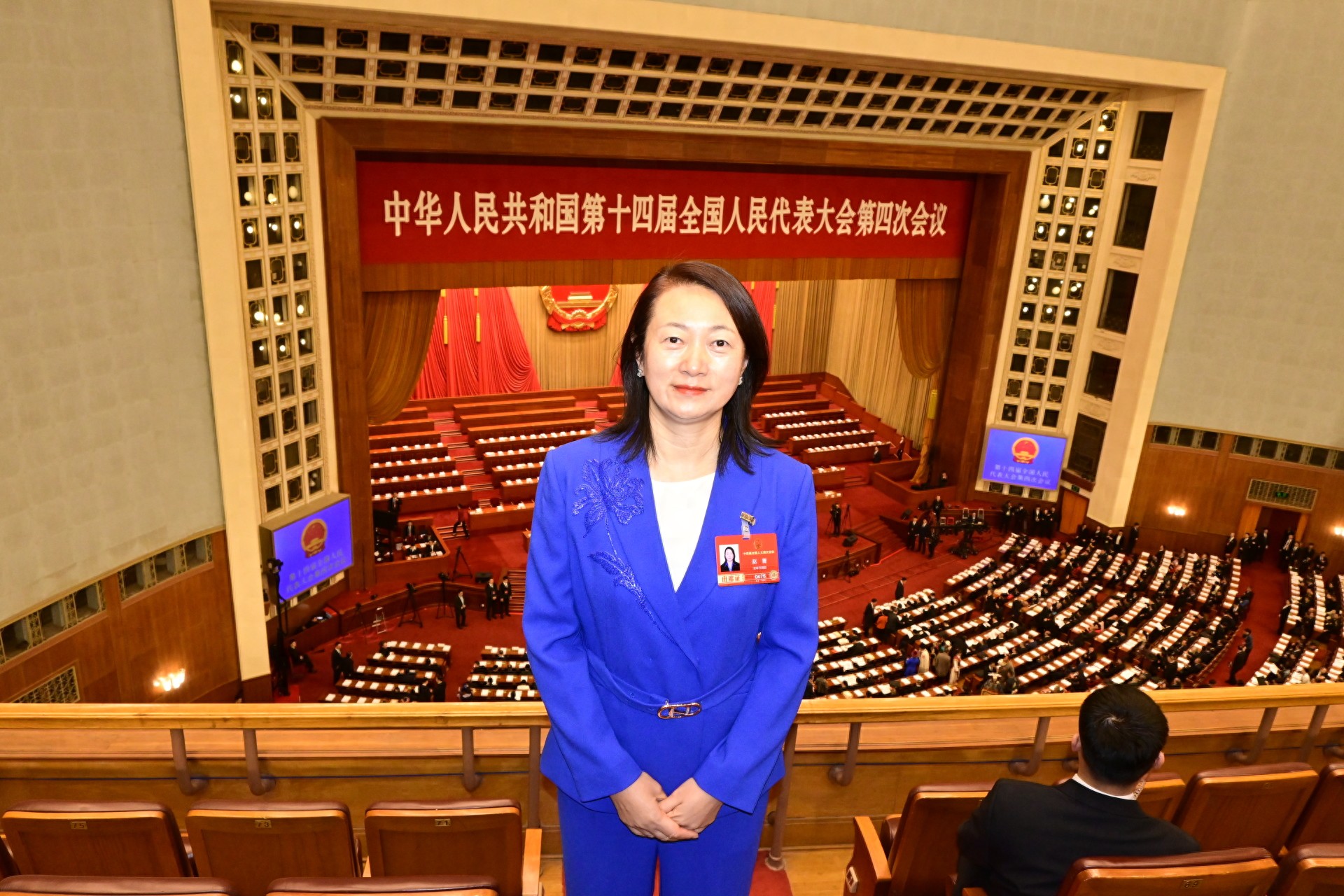
Zhao Jing, Vice Chairman of Buchang Pharmaceutical Picture source: Provided by interviewee
The integration of traditional Chinese medicine and artificial intelligence is the general trend
Traditional Chinese medicine is an important resource in my country that has multiple attributes of health, economic development, cultural inheritance, and ecological protection. It plays an irreplaceable and unique role in protecting the lives and health of the people, cultivating new productive forces in the pharmaceutical industry, assisting the construction of a healthy China, and promoting the process of Chinese modernization.
Zhao Jing believes that taking inheritance and innovation as the core, promoting the integration of artificial intelligence into the entire chain of inheritance and innovation of the traditional Chinese medicine industry, and forming a new pattern of high-quality development covering the entire chain, the purpose is not to replace traditional industries, but to use modern digital and intelligent technology to reconstruct a new ecological development model of traditional Chinese medicine culture. Its core value lies in activating the wisdom of ancient books, reshaping the cognitive system, innovating communication narratives, strengthening cultural identity, and helping more companies successfully "go overseas" to enhance their international voice, so that thousands of years of Chinese nation's wisdom can be reborn in the digital age. This road is both the general trend and the only way to go.
According to Zhao Jing’s observation, in recent years, national-level top-level designs in China and even around the world have simultaneously focused on the field of medical artificial intelligence. The upgrading of health market demand will usher in changes in precision and health efficiency, forcing more pharmaceutical companies to transform and upgrade.
If we can accelerate the integration of artificial intelligence into all links of the entire chain of my country's traditional Chinese medicine and industrial inheritance, innovation and development, intelligent data systems and information systems can help solve the problems of high-frequency collection and real-time storage of large amounts of data in pharmaceutical production and research and development, as well as warehousing and transportation. Production costs such as human, material and financial resources will also be greatly reduced, which will help the high-quality development and rapid upgrading of traditional Chinese medicine and industry.
To build a full-chain traceability system, it is recommended to start from three aspects
During the "14th Five-Year Plan" period, China insisted on taking innovation as the primary driving force for industrial development, ranking among the top ten in the global innovation index for the first time, and taking solid steps in the construction of a modern industrial system. Practice has proven that new productive forces are bringing more opportunities and development space to China, and will surely become a key driving force in promoting economic development and enhancing industrial competitiveness.
Zhao Jing put forward three suggestions regarding the profound question of how to "make traditional Chinese medicine maintain its true nature while integrating into modern times, serve people's livelihood and go global".
First of all, during the "15th Five-Year Plan" period, we will coordinate and promote the three major special actions of "improving the quality and stable supply of traditional Chinese medicine raw materials", "enhancing intelligent manufacturing capabilities" and "cultivating brands of intelligent manufacturing enterprises" to form a "raw material-production-brand" full chain empowerment system and cultivate a large number of digital intelligence transformation enterprises with advanced "digital intelligence technology" levels.
Secondly, during the "15th Five-Year Plan" period, more and more companies will successfully "go overseas", which also means that more and more companies will face the dual pressures of domestic quality control upgrades and international market access. These have put forward higher and newer requirements for the construction of a traceability system for the entire industry chain of traditional Chinese medicine.
In response to these challenges, Zhao Jing suggested building a full-chain traceability system, which includes three major aspects. The first is to upgrade the intelligence level of the Chinese herbal medicine trading platform, using AI (artificial intelligence) algorithms to achieve supply and demand matching, price prediction and risk management, and to support multi-modal smart logistics query methods such as voice, pictures, and videos; the second is to integrate AI and blockchain technology to cover production and processing, product research and development, warehousing, In the entire transportation process, the source of each batch of products can be traced, the destination can be traced, and the responsibilities can be investigated, effectively combating counterfeiting. The third is to optimize cross-border circulation services, develop AI multi-language adaptation modules, rely on the global Chinese medicine resource library to identify import and export business opportunities, shorten document processing time, and help Chinese medicine "go global."
In addition, Zhao Jing believes that strengthening various policy support guarantees and accelerating the convergence of data elements will provide all-round guarantee for the integrated development of artificial intelligence and traditional Chinese medicine; it is also important to launch the "TCM GAP Special Talent Plan" to create a comprehensive talent echelon that understands both traditional Chinese medicine and artificial intelligence.