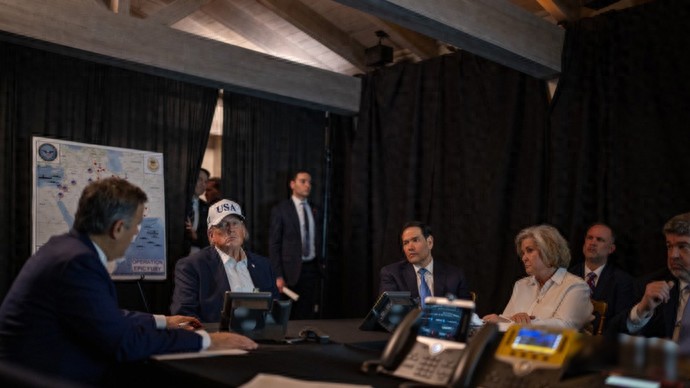
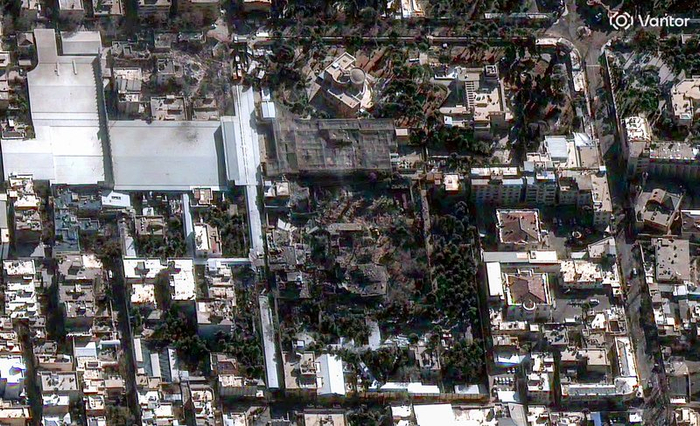
According to Xinhua News Agency, on the 5th local time, U.S. President Trump met at the White House with the Inter Miami team of the Major League Soccer League where football superstar Messi plays. The team will win the Major League Soccer Cup in 2025.
Trump said to Messi: "My son (Barron) is a big fan of yours. He thinks you are a great person." Trump added: "I shouldn't say this because I am older, but I have watched Pele play. You may be better than Pele."
However, after the team presented Trump with customized jerseys and signed footballs, Trump suddenly changed the topic during his speech and talked about the international situation. He said that after using force against Iran, it was only "a matter of time" for the United States to resolve the Cuban issue. U.S. Secretary of State Rubio was making preparations, but at the moment the United States had to "solve the Iranian issue first."
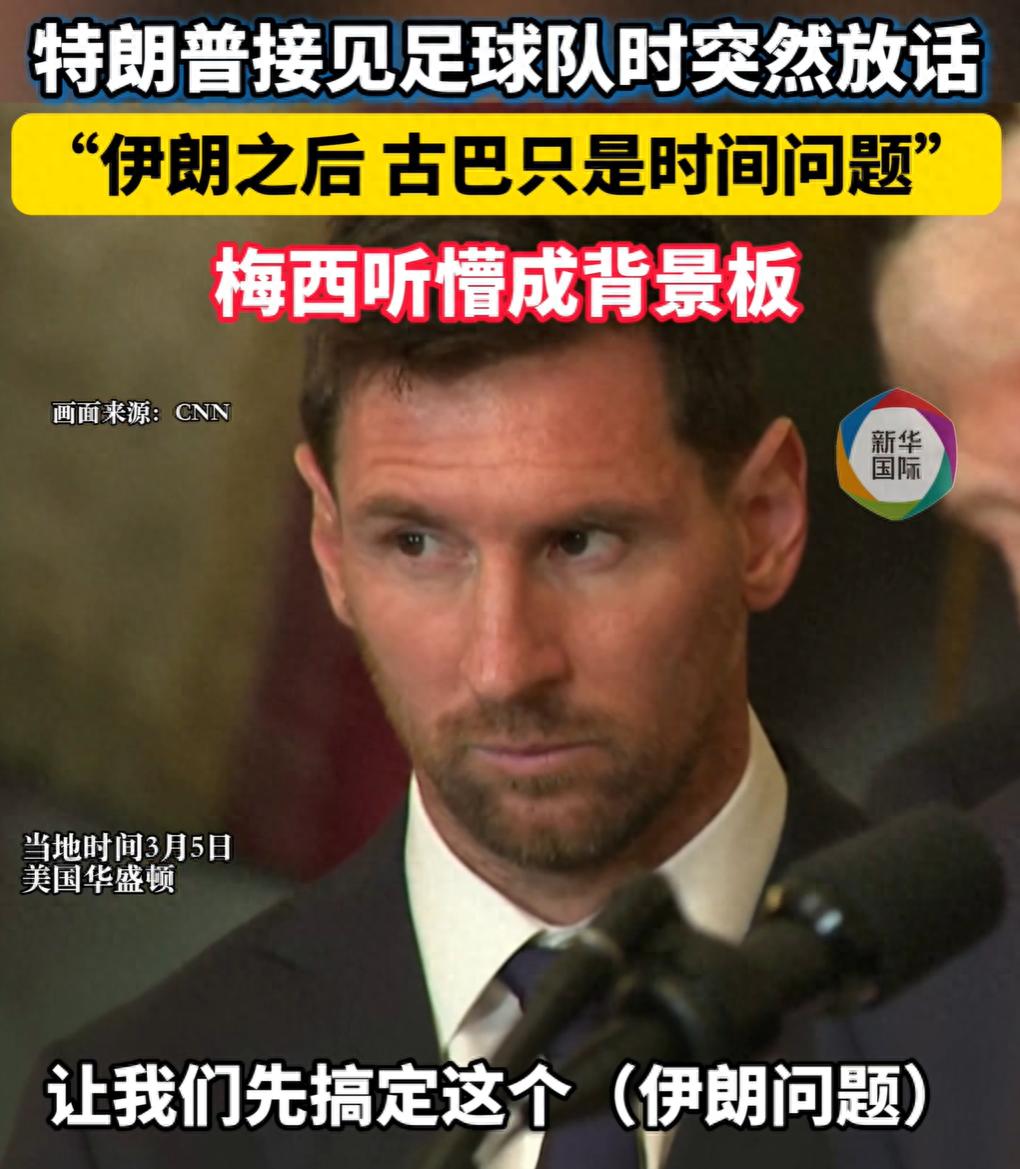
He said Cuba was "very desperate to reach a deal" and said the situation in Venezuela had been "stable" and praised Venezuela's current acting president, Delcy Rodriguez.
Messi was obviously confused after hearing this. Some netizens noticed the change in Messi's expression – from the innocent smile at the beginning to vigilance and seriousness.
In addition, Trump declared on social media on the 6th that "there will be no agreement with Iran unless it surrenders unconditionally." He also said the United States "and its many allies" want to "make Iran great again!"
It is worth noting that on March 5, local time, the U.S. House of Representatives rejected a bill by a vote of 219 to 212. The bill was originally intended to require the president to obtain authorization from Congress before launching further military strikes against Iran.
The voting results were basically along party lines, with two Republican congressmen joining the Democratic camp to vote in favor, and four Democratic congressmen joining the Republican camp to vote against.
A similar bill was rejected in the Senate the day before, with 47 votes in favor and 53 votes against.
According to the U.S. Constitution, only Congress can authorize war. A bill passed by the U.S. Congress in 1973 stipulates that the U.S. president can only take limited military action without congressional authorization during a national emergency caused by an attack or imminent threat against the United States. In response to the U.S. military action against Iran, many Democratic congressmen spoke out, criticizing the action as being "illegal" without authorization from Congress.